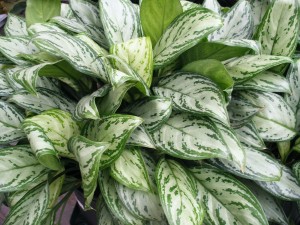
Hybrid Chinese Evergreen
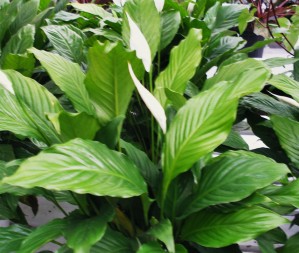
Spathyphyllum
As the end of summer approaches and night temperatures start to drop below 50 degrees, it is time to think about bringing your houseplants back inside. Summer vacation is over.
Most houseplants are, after all, tropical and are accustomed to warm climates. Plants such as winter jasmine, Christmas & Thanksgiving cactus and cymbidium orchids will tolerate cooler temperatures (40’s) and actually need the colder temps and shorter days to stimulate bud-formation for winter blooming.
Before you bring your plants indoors there are a few things you should do.
Two weeks prior
Move your houseplant into the shade to help adjust to the lower light indoors.
While they are outside, clean your windows. A clean window will allow more light to pass through than a dirty one.
Check your plants
Look for insects and eggs that may want to camp out indoors for the winter. To force out any unwanted pests, soak your plant up to the rim in a sink full of water. If that is not possible, try a soil drench – systemic granules that are sprinkled on the soil surface and watered in. It usually lasts up to 4 months. If necessary, spray the plant with insecticidal soap or a recommended topical spray covering the top and undersides of the leaves.
You don’t want to bring uninvited guests into the house. Infested plants will need vigilant treatments, so you have to decide if its worth the trouble.
No need to repot
Unless your plant is totally potbound there is no need to repot it. If you feel its necessary, refresh the soil with a lightweight soiless mix but do not change the size of the pot. Also, take the opportunity to check for insects. It’s best to repot your plants in the spring when they are ready to grow again.
Stop fertilizing
Plants should be fed when they are actively growing so they can take advantage of the nutrients. Low light conditions, short days will reduce plant growth therefore, fertilization should be stopped, except for winter flowering plants. Resume feeding in late winter.
Water less
Once indoors, your plants will require less water because they will grow slower or stop growing during the winter months. Check the soil before watering. The top 2 inches should be dry before watering again. Be sure the plant does not sit in water as that can cause the roots to rot. Overwatering is a major problem of houseplants.
More info on houseplant care: http://hortchat.com/info/how-to-make-a-pebble-tray
From the reader archive
Useful reader questions
I saw the post about soaking houseplants in water in the sink to get rid of pests, but what if the plant/pot is bigger than a garbage pail and you have no place to soak it? I have Merit that I use…
Read Kris discussiongolfish plant problem Hello, I have a 2 yr old goldfish plant, my question is, how can I get it to start blooming again. I tried moving it to different spots in the house, but no buds or “goldfish” on the plant…
Read Nancy Newell discussionHello! my mom bought a confederate jasmine and it has continued to bloom in the pot she purchased it in. My moms question is Should she leave it in the pot and place inside for the winter(lives in Virginia), or should she…
Read Muriel Wright discussionhelp PLEASE – can I cut back the leaves on hibiscus. I took the plant outside too soon and there are almost no leaves left that are green. I do not think it will survive so I wonder if there is anything…
Read hayley discussion
Hello! my mom bought a confederate jasmine and it has continued to bloom in the pot she purchased it in. My moms question is Should she leave it in the pot and place inside for the winter(lives in Virginia), or should she plant outside? Thanks for answering this question. Daughter M. Leech
I saw the post about soaking houseplants in water in the sink to get rid of pests, but what if the plant/pot is bigger than a garbage pail and you have no place to soak it? I have Merit that I use on my roses, would this work if I do a soil drench? I am also concerned about the ants that seem to be in some of the pots. Does insecticidal spray work on them also if they are in the dirt? Thanks a lot.
I had a beautiful hanging basket with a plant called an Orchid Cactus when I lived in California. I rescued it from the trash and had it for three years. I am having a hard time finding this plant on the east coast. No one has never heard of it. It has the most beautiful blooms amid ugly cactus leaves. Please help.
golfish plant problem
Hello, I have a 2 yr old goldfish plant, my question is, how can I get it to start blooming again. I tried moving it to different spots in the house, but no buds or “goldfish” on the plant yet.. also where is the best spot to keep it ??
thanks, Nancy, Harvey’s Lake, Pa.
I have a flowering house plant that I don’t know what it is. Is there someplace where I can go to identify it? Thanks
Houseplants-bring them insideSOMETHING KEEPS EATING MY ALOE VERA PLANTS. WHAT COULD IT BE AND HOW CAN I STOP IT? I’VE TRIED PUTTING BLACK PEPPER ON MY PLANTS BUT DOESN’T STOP WHATEVER IT IS.
hi i have project do and i dont how to keep a plant alive
I have worms, and really small centapedes. I think that is what they are in my plant is that good or bad. I got rid of all the dirt was that ok. What do I do
i live in canada and i was wondering how i could bring in my pot of roses indoors for winter what steps can i take to save them
I have 2 Pygmy Date palm trees that i planted this summer. Last night the temperatures got down to about 24 degrees. I wanted to know can these trees stand these temperatures? We had a hard freeze for several hours, is this going to kill my trees? Is there anything i can do to save them? thank you for your help
I live in Canada, i have a Guava tree about 10 Years old ,i put it in the Garage for the Winter ,just under a light ( no Windows),should i change the Soil before bringing it inside
help PLEASE – can I cut back the leaves on hibiscus. I took the plant outside too soon and there are almost no leaves left that are green. I do not think it will survive so I wonder if there is anything more I can do???
our proplem is our house dosent have hardly has any windows so when we bring in our plants they start wilting and leaves begin to fall off and we have alot of plants
Hi Russell
Have you considered grow lights?