‘Endless Summer ‘ Hydrangea is part of a small group of hydrangea macrophylla that is known to be dependable for winter hardiness zone 4-9 (-25 to -30F) and repeat blooming.
It was discovered in St. Paul, Minnesotta, by Vern Black an employee of Bailey Nursery. After several years of trial testing, it was confirmed that wintered plants that died back to the ground still set buds and produced flowers the same season; proving that it bloomed on new as well as old wood. This is an unusual characteristic for H. macrophylla because it blooms only on old wood. The new plant was referred to as a remontant or everblooming hydrangea because it had the ability to form flower buds in the tips of new growth allowing repeat flowering throughout the growing season.
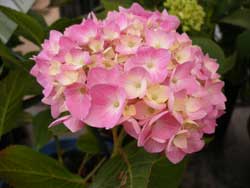
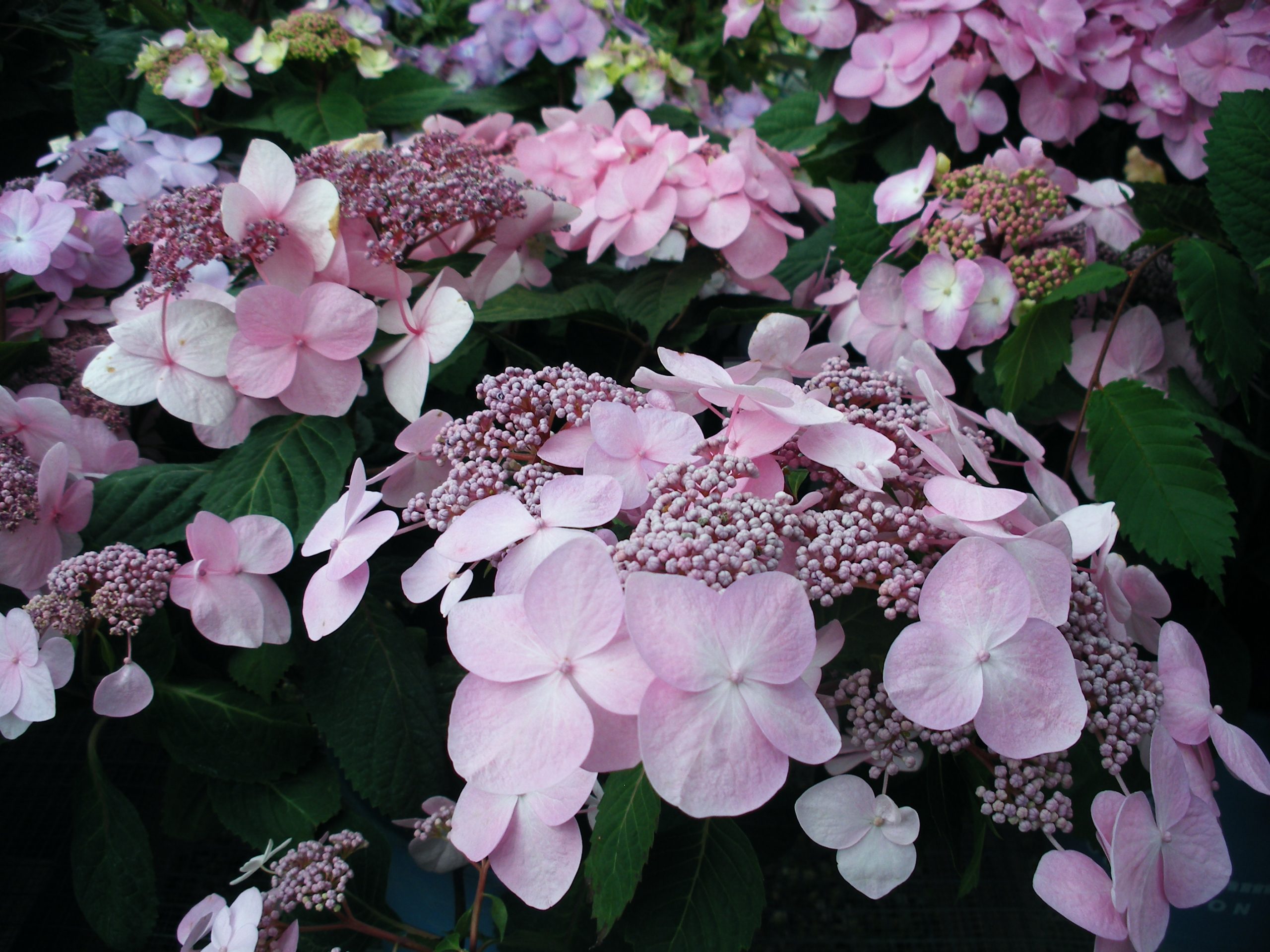
‘Endless Summer’ Bailmer grows to 3-5 feet high and wide and the color depends on the soil ph .
Since its introduction, similar cultivars of remontant Hydrangeas were discovered such as: ‘Penny Mac’, ‘All Summer Beauty’, ‘Blushing Bride’. ‘Dooley’, ‘David Ramsey’, ‘Decatur Blue’, ‘Mini Penny’, ‘Oak Hill’ and ‘Twist n Shout’. New and improved cultivars are constantly being tested and evaluated. Look for more varieties in the future.
Planting hydrangea & care
-Choose a location with morning sun and afternoon shade.
-Plant in moist, well-drained soil. Amend poor soils with organic material.
-Dig a hole 2x the size of the rootball, mix in compost/peat moss. Before planting check the roots are they white and healthy? Gently loosen the roots before placing in the ground and plant at the same soil level as grown in the container. Backfill the soil and be sure not to compact the soil. Water well to fill in any loose soil.
-Add 2 inches of mulch around the perimeter of the plants staying away from the center. This will keep the soil evenly moist and conserve moisture.
-Don’t plant under a tree as there will be competition for light and moisture.
For additional info see Hydrangea care
From the reader archive
Useful reader questions
Transplant shock I have just bought 5 endless summer hydrangeas and plant them in a raised bed around south side of my garage. One on the west side get no morning sun but get afternoon sun , a few get alot more…
Read becky discussionHeat tolerance I purchased 3 All Summer Beauty Hydrangeas in the fall of 2009, so they are going on 2 years old. The ends of my house face Northwest and Southeast. When I purchased the hydrangeas, I thought they would be a…
Read Jack discussionNot blooming I have a question regarding my Endless Summer Hydrangea. I left a post on here last year too. Anyway, I planted my hydrangea last year and it had plenty of blooms on it then. Granted they eventually started turning brown…
Read Brian discussionWinter protection Great information here, thanks! I do have a question, though. I have four endless summer hydrangeas on the N side of my house where they get part sun, mostly shade. They bloom profusely but don’t seem to grow much in…
Read Alyssa discussion
Winter protection
I have two Endless Summer hydrangas and live in Vermont, how do you suggest preparing them for the cold winter months?
Leaf spot
I have 5 new hydrangia (endless summer) plants I purchased from a nursery this summer 2005. They seem to be doing fine, blooming ok but they leaves have brown spots on them, it looks like rust. Any ideas what that might be? Thank you.
Hydrangea not blooming
I purchased an Endless Summer hydrangea last summer. It bloomed beautifully last year, wintered well, and has really nice foliage this year, but no blooms. It gets plenty of sun and water, and I haven’t fertilized it (so no over-fertilization). Any thoughts?
.
I have a nikko blue and know it is suppose to bloom on old wood. Mine never has. It puts on 10″ of new grown and then blooms. It also put up new shoots out of the ground then bloom on the new shoots. I have lived in many states and it is the same everywhere i have lived.. . . what gives? Dawna
Pruning
I have 5 Endless Summer Hydrangeas plants on the side of my house which is partial to full sun. Now that we are going into the winter months here in Chicago Il, I dont know if we ned to cut them all down, to have full bloom and healthy stems for next Spring,,??
Can Endless Summer Hydrangas live in large pots?
Rust
Hi, I live in Ohio and we are in zone 5 and I have 2 endless summer hydrangea’s. At this time we are going thru a drought in our state but all most all my flowers look ok but the hydrangea’s I bought early this spring. Now I have rust on the leaves. It bloomed fine, except the ht. didn’t grow at all, is there some type of chemical to put on the plants to get rid of the rust, or should I remove the leaves? Is there any way to produce more flowers, as since this was there first season, I still have a few flowers, but was wondering if there was a method on how to produce more. I followed the planting instructions to the “T” so I know they are planted in the right place. If anyone could help I would appreciate I don’t want to lose them thanks. Barbara C.
Thanks for the great information on my rust problems for my endless summer hydrangeas. The problem with one is the rust is on most of all of the leaves. I can’t spray anything on them in Ohio it’s in the high 80’s and going to be 91 degrees this week. We are in the middle of a drought. If I remove the rusted leaves I may not have any leaves left on 1 plant, I wouldn’t mind if it came back next year, or should I move it, right now it is facing east under an overhang. The tag when I bought it said shade part sun, and that’s where they both are planted. The other one is at the other end of the overhang in front of the house and now it looks good, after removing rusted leaves. Should I move it, or will it die, I really don’t want to lose it. Thanks Barb C
Color on hydrangea
I just planted my endless summer hydrangea around Mother’s Day. It gets morning sun & afternoon shade after about 3 pm. I am keeping it well watered daily or every other day. I live in Missouri & we have been dry the past three weeks or so. My question is this: It had beautiful blue blooms to start, now they are turning white. Are you supposed to fertilize at all during the growning season? Or only to start once in the spring? My soil is very clay-like. I’d like to keep the blooms blue. What do I need to give the plant to keep blue blooms? I love this plant & don’t want to kill it! Thanks! JB
Cut off blooms
I have one Endless Summer Hydrangea that I planted in the spring. It bloomed beautifully and still has the blooms attached, but almost all the stems are lying on the ground. It is almost as if the blooms are too heavy for the stems. Should I deadhead the blooms which are pretty much past? I live in Mass and the weather has been hot, but the plant gets plenty of water.
Planting Hydrangea
I bought 3 baby endless summer hydrangea’s this spring. I planted one directly in the soil and it died within a few weeks. I planted the other two in pots and they are doing well. One is in a larger pot 15 inches and the other in a smaller pot. I’ve read now that the root system is vigorous and I’m afraid at least the smaller pot may be too small for much continued growth. I eventually want to plant them in the ground. Could you please provide guidance about the best way and time to go about this. I live in southern South Dakota – Zone 4. Thanks!
Chlorosis
I have about 10 Endless summer plants. 4 of them are doing well. The others have no blooms and have turned a very sickly bright green color on the leaves. In spots they are almost white on the foliage. They also have not grown any since spring. Very small around 12 inches tall. I live in Alabama zone 7. I would appreciate any help for these poor plants.
Planting hydrangea
Our new Endless Summer Hydrangia died less than 10 days after planting. It looked a littly droopy just before we left for vacation, so watered it thoroughly. Two days later when we returned, it looked like cooked spinach, and did not surivive. Could it have been over watered? Some friends said it did not have enough water. It was planted in a filtered sunlight (not direct) area on the north side of our home. We have had this same problem with each hydrangia we try – in various locations in our yard – all end up irreversably wilted. What are we doing wrong?
You might consider the soil and planting procedures. Hydrangeas need rich, well-drained evenly, moist soil. If you have clay soil it will retain a lot of moisture but does not drain freely. Adding organic materials such as peat moss, compost will improve the soil. Good soil preparation is the key to successful growth. When planting make the hole larger than the root ball, 2x is sufficient and add orgainic material. Plant at the same level or slightly higher as grown in the container. Before planting check the roots are they white and healthy? Then gently loosen the roots before placing in the ground. Backfill the soil and be sure not to compact the soil. Water in the plant which will fill in any loose soil. Add 2 inches of mulch over the plants. I suspect that your hydrangeas died from root rot caused by too much water or underwatering (if you have sandy soil). Not knowing which type of soil you have and how much you watered, its difficult to determine but I hope some of this will help.
Not blooming
I am in Ohio where we had a late spring freeze and are now in the midst of a heat wave & drought conditions. I planted my Endless Summer hydrangea last year and it had lovely blooms several times during the summer.
This year I have healthy green stems & leaves, but not a single bloom. I water it if it seems to be wilting from the heat.
Do you have any thoughts on why it isn’t blooming and what I should do to ensure blooms next year? Thanks for your help!
Mulching
My neighbor just planted Endless Summer. She has a bout 5″ or more of mulch close to the plant, what is the proper amount of mulch to use after planting? Should the blossoms be cut after just planting, to encourage root growth? Should any root starter or fertilizer be used at planting?
Transplant hydrangea
My mom lives in Central Illinois and wants to know if she can transplant her hydrangeas into pots for the winter. She wants to relocate the plants to a different area in her yard next spring.
Transplanting hydrangea
I live in Ontario and have a beautiful Endless Summer that is about 3 years old. We are moving in May and I would like to take it with me. How safe is it to tansplant at this time of year? Any suggestions on safe transplanting if you think it would be fine to take with us?
Thanks Lynne
I bought an E.S. hydrangea earlier this spring and replanted it in a pot and added some fertilizer. The soil is moist but well-drained and the plant gets afternoon sun. The temps where I live have mostly been in the high 70s to low 80s during the day, but they are still pretty cool at night (in the 40s) The blooms were a beautiful blue, but now they are fading and even turning green. Some look wilted. The leaves still look fine. What can I do to revive the flowers? Thanks.
Powdery Mildew
I purchased 2 Endless Blooming hydrangeas and planted them under a tree where they get a little morning sun and rest of day is shade. I realize I need to transplant them so they can get more morning sun but they have mold on the leaves. Can I spray with a fungus spray or will just transplanting fix the problem. They really look sick. They have a couple small blooms on them. Please let me know as I don’t want to lose them.
Winter dieback
I have 2 Endless Summer Hydrangea, 3 years old. My plants get about 3 hours of full morning sun – and up till 1pm they get filtered sunlight then full shade.
They never get any new growth on last years wood. They start over from the ground up each year. I end up pruning the old wood off once the new growth is about 6 inches or so tall. They grow to about 10 or 12 inches high and bloom nicely. Blue blooms and nice healthy green leaves. I’d like to see them grow taller and grow back from old wood. What can I do? Do they need a little more sunshine? I am in Central Nebraska very near zones 4b and 5a.
Large and small blooms
I have 8 E.S. plants. They have been established for 3 years. I fertilize with Holly-tone and prune deadheads and stocks in the spring. The problem is some plants have lots of blooms while others have a few. I have really large and really small blooms on the same plant and the stems are very limp. They get plenty of water, which I understand they love. I would appreciate any advice.
Flopping stems
I live in Connecticut and planted 5 Endless Summer Hydangea plants last summer. They are all doing terrific with many blooms. I have not pruned them since they were planted. I have found that when they first start their growth in the spring and begin to develop their blooms, the plant has a nice full shape with height. After one month, the branches seem to sag bringing alot of the blooms to lay on the ground creating a flatter looking plant. I am not sure if I need to prune to create a full plant that maintains its height or if there is a different solution. If prunning is the answer, what is the correct way to prune and when do I prune in my area. I do not want to interrupt blooms for the next season.
Flowers turn green
I have a 3 yr old Endless Summer hydrangea. It is doing well in a pot on covered porch and gets morning sun. My problem is that the flowers are green. I know they turn green as the bloom ages but these start out green and stay green. The first year they were blue and started to turn pink. I fertilized with acid fertilizer for hydrangeas and the flowers turned green. I searched all over for an answer and was told maybe the water ph is competing with the fertilizer and making it neutral. So I stopped fertilizer last year and the flowers turned pink. I decided to fertilize with just regular fertilizer for blooming flowers this year and my flowers are green again. The obvious answer is don’t fertilize but since the plant is in a pot, doesn’t it need some nutrients? I sure would appreciate some advice. Thanks!
Anthractnose on hydrangea
I live in Virginia and recently had some landscaping done (June 2) in a fairly shady area of our yard. I have 6 new E.S. hydrangea which I love. A couple of weeks ago, I noticed some brown spots on the blooms which look just like the photo of anthracnose on the “diseases of hydrangea” website. I have been picking off the affected petals, but there are more of them everyday. The landscape designer suggested using 3336, but the nursery guy advised against it suggesting that the plants would then require it all the time. He recommended instead to remove the brown petals. The leaves look healthy. there are a few spots/holes, but not many. I had started doing some overhead watering, but stopped when I found the brown spots. Could you please give me your advice? Thanks!
Karin
HYDRANGEA WHITE WAVE,
my hydrangea white wave (white lacecap) looks all wilted and practically dead, it was just planted 2 days ago, do you think it’s the heat?
Dormancy
I have a hydrangea plant that is about 3 years old. It looks very healthy but has only produced one sad little flower….and it is just coming on! I expect that it is located in an area that is too shaded. I’d like to move it but am afraid. Your sight references spring or fall when dormant. Dumb question…how do I know it is dormant? THANKS!
Winter protection in a pot
I was given a Blue Summer Hydrangea, in a double pot. It’s been trimmed down to about 15″ & there is new growth. I would like to know what I can do to overwinter the pot. It is on my 22nd floor balcony facing north-east in Southern Ontario, where temps are supposed to fall to 14C/6C in the next couple of days. Can I leave the pot outside for the winter? What can I do to protect the roots during our -20C winter?
Winterize hydrangea in a container
Good to know I can leave the plant outside. I wrapped the whole thing, pot & plant with bubble wrap, but am wondering if that’s over-kill??? Just having read your other section on hydrangea care, should I bubble-wrap just the pot, & cover the actual plant with something else? I’ve also completely covered my hostas with the wrap- is there something else I should be doing for them as well?
Thanks!
Winter protection
Great information here, thanks! I do have a question, though. I have four endless summer hydrangeas on the N side of my house where they get part sun, mostly shade. They bloom profusely but don’t seem to grow much in size. I’ve had them for 3 years and this past summer the plants were the biggest they’ve been, but they don’t seem to be approaching 3 feet at all. Each winter the branches and buds have died, which I’m assuming has a lot to do with the size. Will the plant ever reach it’s maximum if the branches keep dying back each winter or does the root growth take care of the size somehow? Also, I just bought burlap and stakes to shield the plants and I planned on filling each cylinder with some mulched oak leaves. Is this going to be ok for the plants? Do I need to worry about mold on the leaves harming the plant over the winter? Thank you so much for any help you can give me.
Blushing Bride hydrangea
I live in Nashville. I bought 3 Blushing Bride hydrangeas last spring. They were beautiful. This spring, two of them have started to grow back, and the third only has some new growth at the base, that’s it. My other Endless Summer’s are starting to get flower heads and are growing back almost to the full amount of growth from last year. But, this one seems so far behind the others. Is it too early to tell if it won’t come back this year, or should I wait awhile longer to see what happens? Also, do I need to prune back old wood on the Endless Summer and Blushing Bride? And if so, when do I do that?
Someone PLEASE HELP ME! I planted a Endless Summer Hydrangea late last month (April) and its planted at the edge of my back yard. On a sunny day, it gets sun for most of the day. Or at least a good half of the day. I had bought a bag of good potting soil and it had some fertilizer already mixed into it. I don’t remember exactly what kind of soil it was as I have already thrown the bag away. I put that soil in first and then planted my hydrangea. I also added 1 tablespoon of Fast Acting Sulfur so that I would get blue flowers on it instead of pink flowers. Before I planted it, there was nothing wrong with it. It looked very much healthy. After about 1-2 weeks or so, some of the leaves started to turn this almost dark purplish color. And about another week later or so, some of the leaves started getting almost grayish/silver/light brownish spots on them. I have NOT added any additional fertilizer to it. I made sure to water it good after I was done planting it. I also try to water it every other day that it doesn’t rain. The leaves that are changing color are the ones that are more on top and out in the open. I looked at some of the leaves that are closer to the ground and more shaded and those are still perfectly green. They weren’t changing color. I had gone to a garden center and brought in a leaf with me and spoke to someone there. They didn’t seem to think it was diseased or anything like that. They told me to just make sure it gets enough water. Some of the blooms/flowers on it have also turned brown on it. Been thinking about maybe deadheading but not sure yet. I would like an answer to this ASAP as I DON’T want it to die on me. My parents bought this hydrangea for me and they told me it wasn’t cheap. They paid somewhere between 25-35 dollars for it. So, any help at all would be very much appreciated. Thanks much!
I live in southern CA. (near LA, zone 10-11) and want to put 3 ES plants in my yard. The best place for them is mostly shady and gets a few hours of sun. However, it is AFTERNOON sun and not morning sun as recommended. Will that really matter? Does the general warmth and sunniness of southern CA help in this respect? Thanks for all the helpful advice..
I live in zone 4 and have just planted an ES Hydrangea in the ground. My question concerns winter protection. It is planted close to and on the north side of the house. During the winter, there is often an accumulation of snow that has turned to ice in that or close to that spot. This snow/ice accumulation disappears some time after the snow elsewhere on the property. Is tying the stems, mulching and/or a burlap wrap sufficient protection?
Thanks
.
Hi-
I live in NH and have a ton of deer in my yard. I have lots of lilacs and just planted an ES hydrangea. My question is will the deer eat this?? They have never touched my lilac’s in the past but my husband bought me a red one, and they keep eating it!
Thanks,
Laura
I have 4 Endless Summer Hydrangeas. They are planted along a fence, they get sun and shade. They were planted on Mother’s Day. All did well until a few days ago. I did spray some weed kiler on some poison ivy and I thought I ws careful not to get the spray on the Hydrangeas. Three are doing well, but one (the one that was closest to the Poison Ivy) has drooping leaves, still green, no spots, just drooping, it even has a bloom starting on it with no signs of dying. I watered it thinking that it may not have enough water because it is planted where the ground starts to slope downward. It is slightly under a limb of a Dogwood Tree but still seems to get good sun. Can anyone provide some tips for me to try and see if I can bring this plant back?
My Hydrangea shows no signs of rejuvenating! All the stems are green when I lightly scratched them, yet there are no new shoots/buds. The older buds are still brown & I am beginning to despair at ever seeing my plant in bloom! Temperatures here in Mississauga, Ontario are around 18C during the day & 9C at night. It gets morning & evening sunlight for about 45mins to an hour every day, with plenty of rain in the past couple of weeks. I have also fertilised the pot every 2-3wks in the past 2mths after repotting in fresh soil. Please HELP! What else should I be doing to get my plant thriving??
Transplant shock
Hello,
I planted 3 Hydrangea plants 5 days ago and one of the plants is starting to wilt. The plants have gotten plenty of sun and water. Zone 5, and weather is about 65 to 70 degrees. The plant started wilting today and got worse as the day went on. Is there anything I can do to save it?
Please help!
Just a note. It rained Friday night and the droopy hydrangea looks great. I guess it just needed more water than I was giving it.
Botrytis
I recently moved to a place where I have three lovely Hydrangas growing on the east side of my home. They are lovely, productive; and, my landlord tells me the plants have never looked “so good” with other tenants. Problem: the blossoms of one of the plants are turning brown. The color and blossoms are large(or small), full bodied and amonst the beautiful color…the blossoms are turning brown. I thoroughly water every other day…when the weather is rather warm…3-4 days, depending on the weather. I live in the Sacramento Valley; and can only find information on leaves tuning brown. Suggestions? Thanks,
I bought 2 endless summer hydrangeas at the beginning of July that were full of pink blooms. I know that July isn’t the best time for transplanting, but neede d to do so because of the long stretch of time that I would be at home to water them. The blooms have lost their color and have turned dark. The leaves and stems seem to be fine.
Is this because of the transplanting? Should I deadhead the blooms? Will new blooms come before the end of the season? Thanks for your advice!
My endless summer hydrangeas are 4 years old and healthy with lots of large blooms. However, they have grown far larger than anticipated and I’d like to move to a larger/open spot. Can they be moved? If so, when is the best time to move in order to avoid shock to root system? Spring, fall?
I live in Southern Ontario and planted an Endless Summer hydrangea in the spring. It was absolutely beautiful and seemed healthy until one day last week. I came into the garden and the leaves and flowers were lying wilted on the ground. I assumed it needed water which I gave it but now the majority of the plant is brown and wilted. Has it died or will it come back?
ES hydrangea growing pains
I planted 2 endless summer hydrangeas this summer. 2 weeks after planting, one had the back half of the leaves wilt and brown, I plucked off the leaves and have been keeping a careful eye on it. I did notice some spider mites and sprayed for them. The plant still has some bloom starts and has new growth that looks good. Well, over a month later my other hydrangea has done the same thing (still has a pretty bloom and a good number of starts), only the leaves are wilting all over it. Is it shock? fungus? over watering? or something else? When I bought them they had a rust color on some of the older leaves, but the new leaves were nice and green…
I water every 3 days or so, soaking at the base.
I used a root-stimulator when I planted them, but now that it is August and the weather is cooler I’ve been hesitant to use it again.
I live in zone 4, they do get some afternoon sun, probably 2 hours or so and they get some morning sun as well.
Pruning
I live in southern Rhode Island and have 3 thriving “endless summers” that are growing faster than I anticipated. All have huge blue flowers that fade to a lavendar color after several weeks. They are 3 years old and at least 4 ft high. A number of the stems now droop with very large flowers at their ends. I would like to cut them back , but I am afraid of doing harm. Can I cut the stems back at least a foot in the spring and help shape the plant without damaging or killing? Also should I add acidity to the soil to prolong the blue color of the flowers or is this normal.
(date: 10/22/09)
My endless summer’s blooms have turned rusty, small and there are brown spots on the leaves. I’ve seen the comments on brown spots but not any on the blooms losing color and turning rusty.
Hi Brenda
Have the blooms been around for a while?
E.S. hydrangea not blooming
I live in Upstate SC and purchased 2 endless summer hydrangeas in 2006. The plants grow back pretty each year, but have never bloomed. The plants receive morning sun and afternoon shade. What am I doing wrong?
Winter protection
i live in central michigan, and have grown rhododendrons, azaleas and hydrangeas for many years. i use 2×2 stakes a foot or so taller than the various plants at each corner, then staple weed fabric block (black) to the stakes. this keeps the dessicating westerly winds from drying out the plants in the cold michigan winter. specifically for my all summer beauty hydrangeas, i leave the protection on the plant until all danger of frost is past. i also add a top cover of the same material which i staple across the top of the plant any time the temperature gets down to frost levels. this top cover does a very good job of protecting the new growth and flower buds from frost-kill. when the days and nights are nice enough i just leave the top cover off. my hydrangeas get a great head start this way. once weather stabilises in the spring i take down the frame and store for next winter.
I have an endless summer hydrangea and it’s in a large pot. It started blooming this spring and I added Dr. Iron to it so that the blooms would be more blue. Lately, it has been wilting a lot. I don’t know if it’s the iron, the heat or if it’s root bound. We water it every morning, but it stays wilted most of the day. It also has flowers all over it, but they are not really getting larger. I’m not sure if I should transplant it or what to do.
Transplant hydrangea
I live in Eastern MA and about 4 weeks ago I transplanted 2 large hydrangea bushes from my mother’s house in NJ. They are approximately 10 years old but I don’t know the specific variety (large leaves and big round purple flowers). They were thriving in NJ but because of overcrowding my mother decided to thin her garden and offered us the hydrangeas. The bushes were out of the ground for about 6 hours (the roots were kept moist)but we planted them as soon as we arrived home. They r
eceive a few hours of morning sun and a few hours of afternoon sun (a large tree at the other end of our yard shades them during the hottest part of the day) and we watered them plenty. However, both bushes wilted and all of the blooms shriveled up. They look dead but I hope they will come back next year as there is still green growth sprouting. Can I cut back all of the stems now and just hope for rebirth next year? And at what point on the stem should I cut them? Also, what can I do to help these beautiful bushes come back healthier next year?
Transplant shock
I live in Ontario and I just bought an endless summer hydrangea for my front yard. I planted it yesterday with lots of good quality soil and compost. I fertilized and mulched it and yet the plant is heavily wilting. The flowers, stems and leaves have all drooped in less than 24 hours. I don’t have any shady spots in the front or backyard and I was told by the seller than full sun would be okay. What should I do other than water it?
Transplant shock
I live in California and I planted my pink hydrangea several months ago. Was doing really well, so I planted another one next to it. The leaves are very thick, and dark green in color and the one that I planted last the leaves are drying up and look crispy brown on the edges. What’s wrong?
I live in Cleveland Ohio and have 5 beatiful endless summer with blooms everywhere planted on the south side of our house in the front yard (about 10′ from home. These were in the same bed as two large trees which had to be removed 10 days ago due to a storm (the trees were pretty thin and dying anyway). My concern is that we are starting into the heat of the summer and now these plants are going from all day partial shade to partial shade in the morning and almost 3-5 hours of full sun in the afternoon. I will certainly water them but am I better off trying to move them now or wait until later in the fall or next spring? They seem to be doing fine so far. Thanks again for the great advice
The information on this page is very informative!
I have a similar issue to a recent post. I transplanted my roughly 15 year old Nikko from the back yard to the front at exactly the same point of my yard with very similar weatherlike protection and plants. Same lighting obv different soil. Unfortuneately I did this in the past few weeks, as a different front plant was removed and we needed to replace it. Of course my hydrangea is now in shock but severely?! The leaves are still green on the lower edges but mostly wilted on some parts and yes brown crunchy in others. At the top of the stems the plant is bent over with about 3″ overhang that just droops right down and has little life (when you touch the stem it is firm until the overhang then the 3″ is pretty much limp). My question is do I prune it at or around the bend of the stem? Closer to the base to stimulate new growth? Or none of the above as it’s late June and I’ve probably killed it?
When it was in the backyard I never had any problems with it it was very happy there. It’s a very beautiful bush and I would love to revive it, I’m just not sure if there’s any hope for it now.
P.S. I did put bonemeal in with the dirt when first transplanted, unfortunately it didn’t get root fertilizer until this past week. It has been almost three weeks since transplanting.
Any suggestions are greatly appreciated
Too much sun
I have two endless summer hydrangea bushes planted, which gets southern sun all day long. I water them all the time as they tend to wilt with the extreme heat. I have had these plants 3 years, so their blooms are plentiful. However, I was thinking of transplanting them to location with less sun to eleviate this problem. I live in southern Jersey, so the summers can be very hot & humid. Your thoughts: Will these plants continue to be water hogs if I keep them in current location? Or should I move them to spot w/less sun?
powdery mildew/botrytis
I have four blue endless summers and they are absolitely beautiful! have had them 4/5 years and they bloomed this summer a solid bank of blue then suddenly it looked like it had frosted on them. the tops and edges of most of the blooms turned browwn. thet are dying and the plants are coming back out and are in the process of being full of blooms again. was it the horrific heat so soon on the new flowers the problem?
Limp hydrangea
I planted my endless summer hydrangea in sept.2006.no matter how much i water it it goes limp very quickly. I have plenty of blooms on it and it is next to a blushing bride hydrangea that is doing great. help! thanks
Color change
Hello,
I’m new to gardening. I recently purchased two pots of Blue Endless Summer Hydrangeas from the local farm. They were in pots for 2 weeks mostly in shade. I watered them everyday and they were fine. In the third week, I had the landscaper plant them in the front of the house facing East. I don’t know how to test the pH level of the soil but our soil is also covered with decorative brown stones. The landscaper dug a deep hole and planted the pots. We live in Central NJ and I believe it’s zone 6. The problem I’m now facing is that the flowers are not bright blue as they were in pots – they have turned to somewhat pinkish to dull color. Most of the leaves and flowers have turned brown at different spots. If I remove browned flowers (I did remove some), then there will hardly be any flowers left. The landscaper is good at grass cutting but doesn’t have much experience with flowers so now I’m in a limbo as to how to take care of this expensive variety. Please help ! I can also put up a picture if your website allows to upload pics. Thanks !
Hello,
I have an endless summer in a sunny location and I want to move it to a shady spot, and I purchased an incrediball hydrangea to plant in it’s place. I have been reading about incrediball for a year so when I saw it at my local nursery I snapped it up. I know I shouldn’t move the endless summer until fall when it goes dormant however since I jumped the gun on the incrediball will it be ok in the pot until fall? Or should I risk moving the endless summer to the shadier location and plant the incrediball? Thanks so much for your help.
Too much sun
I forgot to mention that my endless summer has been in the ground for 3 years and it get sun from AM to about 4pm in it’s current location. Because it gets too much sun it’s growth is stunted in comparison to my other endless summer hydrangeas ( I have 2 planted in morning sun and afternoon shade that are doing great).
Sure will, I could loose both plants in this heat. Just finished watering my endless summer which is suffering in this 104 degree heat, I’m in PA zone 6
hopefully, the weather will cool down.
Root Hydrangea cuttings
How can I root the endless summer to get more plants instead of buying new each year?
Not blooming
I have a question regarding my Endless Summer Hydrangea. I left a post on here last year too. Anyway, I planted my hydrangea last year and it had plenty of blooms on it then. Granted they eventually started turning brown on me but it still had blooms. Now, this year so far, it has no blooms what so ever. It has plenty of nice green leaves on it and it grew to 2-3 times the size it was last year. Just no blooms on it. I did some very very minor trimming of it early spring. My Mom has a ES Hydrangea and I THINK she planted it the same year as I did. I seen hers just last month and hers had blooms on it already. Hers is planted at the corner of her house in the back yard. Mine is planted in my back yard near the edge of my property. Mine has other flowers planted around it and some of them have grown very tall. I think its getting a little more shade then it did last year from the surrounding flowers but is still getting plenty of sun. I’ve been waiting patiently for it to flower but starting to fear that I may not see blooms at all this year. I have not given it any kind of fertilizer or anything this year. Just water when it needs it. Any help would be appreciated. Thanks much.
I did fertilize my yard back in May. So there is a chance that some of that fertilizer found its way into my flower bed and accidentally fed my hydrangea. I guess I will just wait and see what happens this year. If I don’t get any blooms this year, then hopefully next year. Thanks.
Hello: I am in northern NJ (Z5 I believe) and planted 2 ES hydrangeas in early June on the northeast facing (front) of the house. They have plenty of space around them as they’re the only thing on each side of the steps, in front of the foundation. Added compost to the soil and topped with a thin layer of cedar mulch.
They seemed to be doing fine until this summer’s unusual heat wave came. They were getting full sun until about noon – 12:30. Since they began wilting we started watering every evening, with a wand, taking care not to wet the leaves. (Overall we are about 5″ short of usual rainfall this season.) The stems began flopping so we created a support. Things were fine until a week ago when I noticed new leaves were emerging in a funny shape – pinched at the top, and deformed. One plant has had a leaf with a big hole in it for a few weeks but I had been thinking it was just leaf scorch. The blooms are fading and some are brown & crunchy at the edges (but again, I’d been thinking just scorch).
Now I am worried it is either anthracnose or blight. How do you tell the difference? Were we overwatering? Did tying them up create the problem? We will be getting rid of the bad leaves and all the mulch this weekend, but can they be saved? Should I try spraying, and if so what’s the best choice? Should I cut the blooms back also, or will I then lose next season’s flowers?
Might they have been contaminated right from the nursery?
Very sad… they were looking so pretty!
When to plant
I am thinking of planting some Hydrangea Endless Summer in my garden and was wondering when it is best to plant them, should I wait until spring or can I do it in the autumn and they will survive over winter? Thanks
Pruning Endless Summer hydrangea
I accidently cut back some endless summer hydrangeas this past week its the end of March here in Northern Idaho and after I cut them back I realized that there were little buds on some of the stems I cut off and now I read that these bloom on old growth are these plants gonna be ok even though I cut them back?
Great news thanks for the info
It is early May in Indianapolis. I have 1 quickfire hydrangea and 3 blushing bride hydrangeas. The quickfire came back beautifully. But the blushing brides show no growth on the old wood. There is good solid growth, however, at the base of the plant. Should I prune back the old wood? We had an unseasonably cold winter in the area.
Prune winter damage
The old growth on my Endless Summer seems to be dead from winter kill. These stems look brown and the bark is peeling. There is new growth comming from the base of the plant. Can I cut the old growth down until I see some green without any ill result? It is May here in IN.
my hydrangea have a lot of small blooms,and they are opening up and have no color to them. they are green blooms, a couple had a hint of pink but its gone and they are green. Did I over fertilize? the plant are about five years old.
Fertilize hydrangea
Hello,
Thank you so much for helping me out last year. I was able to revive my ES Hydrangea based on info from your website and further internet research. I live in Central NJ. My plant has green leaves all over again and I’m waiting for the flowers to bloom. Can you pls tell me when the first bloom comes up and should I have fertilized in Feb/March/April ? What is the fertilization process for this plant ?
Thanks.
My Endless Summer Hydrangea are about 6 years old, and for the first time ever, the flower heads are tiny. In previous years, they were easily 8 – 12″ in diameter – this year they are more like 4″ across. The shrubs otherwise look healthy, and these tiny blooms are plentiful. What would cause this change? Thank you!
Hi Pamela
Have you been pruning the plant? The large flowers are produced by the terminal buds and small blooms can come from the lateral buds (lower on the stem).
Transplant shock
I have just bought 5 endless summer hydrangeas and plant them in a raised bed around south side of my garage. One on the west side get no morning sun but get afternoon sun , a few get alot more sun in the morning and one hardly gets any direct sun. The soil was a heavy clay but I dug the hole 2 to 3 times bigger then add a bag of topsoil to fill them in .They were doing ok some wilting but would recover, nursery told me to add root stimulator, so I did that. Now after about two weeks they were wilted this morning ,the soil felt some what damp but watered anyways, usually they recover but were still wilted in the afternoon.The one on the west side wilts alot more it’s the one that get afternoon sun. I was also wondering if the heavy soil is still holding to much dampness in even though I dug the hole bigger then used a bag of topsoil to fill it in? Would mulching help?
HI Becky
Its the soil and location that can be the problem as well as transplant shock. Hydrangeas need well drained soil. One bag of top soil is not going to help with clay soil. Adding peat moss, compost or cotton burr will help improve the soil drainage. Also planting slightly above the soil line can help keep the roots from being water logged. In cases of heavy clay soil, planting in a raised bed is a good idea. Too much sun exposure will also stress the plant and cause it to wilt especially with hot afternoon sun. It takes at least one season for hydrangea to establish a good root system. At this time, there are not enough roots to support all the leaves and any stress will cause them to wilt. The root stimulant should help. Mulching around the plants will help maintain even moisture and soil temperature.
Here are some tips for planting hydrangea:
-Choose a location with morning sun and afternoon shade.
-Plant in moist, well-drained soil. Amend poor soils with organic material.
-Dig a hole 2x the size of the rootball, mix in compost/peat moss. Gently loosen the roots before placing in the ground and plant at the same soil level as grown in the container. Backfill the soil and be sure not to compact the soil. Water the plant which will fill in any loose soil and add 2 inches of mulch over the plants.
-Don’t plant under a tree as there will be competition for light and moisture.
I think I have beginners luck! I planted 6 endless summers last summer (in July), watered every other day, and they are doing amazing this year. Plants look like they have all added about 6″ of growth and have several flowers on the way. I even planted them in a spot the gets NO morning sun and all afternoon sun (the harsh kind). I think it may help the I put in a watering system that I can put on during the later afternoon of those hot days (its all under the mulch). Within two hrs. of watering the plant (if it looks stressed)it comes back and looks like a million bucks. My mother (who is a plant expert) has no idea why they are doing so well seeing that I have killed nearly every other plant I have ever put in the ground.
North Texas gal who fell in love with Hydrangeas while living in Philly. Now back in Dallas, I bought a good sized ES hydrangea about May 1, 2011. Left it in the pot until my hubby planted it on May 21. Planted in a shrub area in front of my South Facing house. It gets morning sun and by about 1 it’s in the shade for the rest of the day. It did really well for the first week or so. Now, for about a week, we’ve had 95+ degree days. I water it almost daily with about 1 gal of H20. Leaves seem fine. Blooms are browning. Seems that there are some new, non-brown small blooms. There are many blooms from the ground through the crown. Questions: Should I deadhead the brownish blooms? There is a chance that my hubby did not dig a hole wide enough, should I pull it up and make the whole bigger and add something to help drainage? Am I over/under watering (it is hot here!)? Thank you for all of your help!
I planted one small Endless Summer Original around three weeks ago. I know it shouldn’t have afternoon sun but it was the only place I had for it at the moment I figured I’d give it a shot. I was pleasantly surprised that it was doing great! It did wilt slightly in the heat of the day but it seemed that if I gave it it a good gallon of water a day in the evening (in Nebraska, zone 5, with hot summer days) it would have minimal wilt and lots of new blooms. I went out of town this past weekend and had someone water it for me. They didn’t give it as much water as I have been doing (only just wet the mulch and did not water at all today)and it was uncharacteristically hot the past two days as well (100 deg.). Not only was it very wilted, but much of each bloom was brown and singed. My questions are:
— Would the burning have happened had it had more water?
–The blooms aren’t completely singed and they, along with the stems, have perked up over the last two hours with a good watering. Do I remove all of the singed blooms even though parts of the blooms are still alive?
–If I do remove them, where do I cut on the plant to ensure repeat blooming?
–Should I do anything at all? Was all of this inevitable the first very hot day of summer?
Thanks!!
Hi,
I live in Pittsburgh PA. I planted a new Endless Summery Hydrangea a month ago. Two weeks after planting, it had nice blue new flower and two existing blue flowers. It receives almost an entire day of sun except 1 t0 2 hours of shade around 3-5 p.m. The leaves are nice and big and new leaves are coming too.
Now the new flower is wilting every 2nd or 3rd day. If I water it with 5-6 gallons of water; the flower gets fine. 2 to 3 leaves have the brown/purple spots and edges. It also has a new very small green flower developing.
Should I plan on moving the plant or is the location Ok for my climate and location?
Thanks!
Pratik
i purchaced some miniature hydrangeas this year and some of the leaves are wilting and turning crisp and there are some brown spots on the stems the plant is starting to flower i tried acid every 3 weeks no signs of improvment.
Heat tolerance
I purchased 3 All Summer Beauty Hydrangeas in the fall of 2009, so they are going on 2 years old. The ends of my house face Northwest and Southeast. When I purchased the hydrangeas, I thought they would be a good plant to put in the bed at the Northwest end of the house, because all I knew at the time was that they were considered “shade perennials”, and I figured that the northern-most side of the house is the shadiest. It was very hot and dry last year, and I had to water very often due to persistent wilting. Now, the wilting is starting again this year after they looked healthy this spring, as the heat has come very early this year for my area. It was during the ordeal last year that I began to wonder if I’ve planted them in the wrong spot. I realized after planting them that they don’t get any sun up until about 12:30-1 p.m., and then it suddenly beats down directly on them as the sun gets past the house and starts to shift to the west. There are a lot of trees that begin to give them filtered sun to mostly shade not long thereafter, from about 2:30-3 p.m. onward. The trees are mostly silver maple though, which don’t get very full, so some sun still gets through until evening, and on some plants more than others. I should also mention that they are close to the concrete foundation of my brick house, and I wonder if that could be causing them to get too much heat. There are no other large shrubs in the vicinity to shade the area around the foundation — it is a newly planted bed. I’m getting tired of having to water the hydrangeas every day or so, but don’t really have any where else in mind to transplant them to. Should I just give up on them and look for something else to plant? That would be a real bummer because I really like the pictures I’ve seen of the mature hydrangeas and they would really look good in that spot :>( Advice much appreciated.
I’m in zone 6 in southern Ohio. Temperatures don’t normally get above 98 deg. F during the hottest part of the summer. At this time we are in the low-mid 90’s. Like I said it hardly ever gets this hot here this early in the season. Normal high temps for this time of year are around 82.
I believe the Endless Summer is a shame and would like to know who is getting paid to promote these plants. They are in every nursery and store in Minnesota yet ironically no one has them in their yards. They are the most difficult, fussy plants every developed and when you ask a master gardener about the plant they just laugh. We have all tried them in our yards and on one has succeeded. I thought after my first plant when they first came out died, I would try it again this year buying seven and received the same results. This time I am pulling them up and bringing them back to Lowes. You indicates give it three years. Really, with our short growing season who has time to wait three years. You can usually only return plants during a one year period.
Not blooming
I bought and planted 2 Endless Summers 5 years ago, at east side of our house, full sun til afternoon, but they have never bloomed. I will get a good size healthy bush, but no flowers… Live in SE Wisconsin. Have 3 Weigelas and they are doing fine, same side of house. Please help! Thank you..
Botrytis
my endless summer hydrangeas blooms are turning black from the inside out. why? I planted 3.the 1 plant didn”t have many blooms butwhen it did bloom the flowers were small black on the inside. now another plants blooms are starting to turn black we live in Wi the plants get sun in the morning and partial sun in the evening Please help. marybearsfan34@sbc global.net
Heat stress
My ES hydrangea is getting afternoon sun, and in Missouri we are suffering extreme heat and drought right now(100+ each day). I have watered it every morning, but still by 1:00 it is wilting, and now it looks like Anthracnose is setting in. There are “bulls eye” spots on some leaves, but some leaves are just randomly brown and shriveled. If it’s so dry and wilting, why is it suffering from a fungus? The two don’t seem to go together. (I was doing some over-head watering, but will stop now.)
Also, it bloomed well this spring, but only across the bottom half of the plant. Now there are a few blooms developing on some upper branches, but not many.
When to plant
I just bought an ES hydrangea which is in great shape and has a few pink blooms. The soil in my garden bed has recently been amended with compost and organic fertilizer by our landscaper. My questions are: should I wait to plant my hydrangea until the end of August when it’s hopefully cooler AND should I test the soil pH or add anything to make it more acidic given the other amendments already added? Lastly, if you encourage me to plant later please advise where to keep the plan alive until that time. thanks as I look forward to this blooming beauty becoming part of my landscape!
Where to cut off the flower
My ES have been blooming just beautifully since late spring and are now colorless and spent. Should I deadhead the spent blooms and where do I make the cut on the stem?
I just planted four new hydrangeas in June. They are both endless summer plants. They had magnificent blooms on them when we left for vacation 2 weeks ago. We had a girl water them, however it was very hot and humid and I do not think they were watered enough. The Blushing bride has no flowers on it and the others have only half the bloom while the other half is all dried. I am so sad. What do I do. The plants themselves still are in good shape and new blooms are beginning. Should I cut off the brown blooms. Is this natural that they die after a period of time?.
Propagate from cuttings
Today is August 5 and I took cuttings from my hydrangea and put them in a vase.
I live in Minnesota. I am pretty sure it will be too late to plant these outside?? if outside is not an option, can you overwinter them indoors?
I have two endless summer hydrangeas that were planted (side by side) by a professional landscaper in May 2008. We had a very wet spring here in upstate NY, followed by an extremely hot and dry July. While both plants have flowers that have dried and turned brown due to the heat, the leaves on one of the two plants have completely wilted and turned brown as well. The plant looks dead. Both plants received the same amount of light (morning shade and just moderate afternoon sun) and the same amount of water (from a sprinkler every other day) since they are side by side. Why is one plant dying while the other has new, healthy leaf growth? What could be wrong with the sick plant and is there any chance it will recover? There are a few signs of new leaf growth starting, but there’s no way it will ever leaf out enough to look healthy again this year.
hello.
I have 2 endless summer hydrangeas planted in my North facing front yard right next to my house, they are about 4-5 feet apart, flanking the front part of my house.
They get the same amount of water…
One gets more light than the other.
The one with more light has robust foliage, but only 1 small bloom.
The other one (with a bit less light), has less leafs, but lots of blooms.
This is their 3rd summer in my yard and the only year that blooming and growth has been significantly different.
We had a very on-and-off again spring, in fact if feels like we pretty much skipped spring all together, but have had a wetter summer than usual.
I live in southeast Idaho.
Any tips would be awesome.
HI
What about fertilizer and pruning? Is there a chance that the one with more light is getting fed more than the other? Is this the first time that they bloomed?
To answer the posted questions to my previous post.
Fertilizer and pruning is consistent between both plants.
Both plants have bloomed each year I’ve had them, this is the first year the one with a bit more light hasn’t bloomed much (just 1 lone bloom).
Pruning Blushing Bride Hydrangea
Hello this is an EXCELLENT site. Thank you for your knowledge! My question is about my Blushing Bride Endless Summer Hydrangea. I live in charleston sc which is zone 8. I just purchased some and the saleslady mentioned that I should put them in the ground as soon as possible and that I should cut the stems all the way to the ground. I also got the same advice from a neighbor. I am confused because the instructions say not to prune them at all in the fall since it is a different type of hydrangea What is your suggestion? Thank you in advance for your answer.
I recently had some landscaping done by a reputable professional. He planted several ES hydrangeas in raised beds built with an amended soil mixture. My hydrangeas were beautiful for about 4 weeks, then I began to notice some leaves browning and shrivelling up. Then whole plants began to be discolored and now they have serious wilting occuring during the daytime. They recover from the wilt at night without additional watering. We have had an extremely wet spring with very cool nights and warmer days. The wilting began when daytime temps started climbing to mid 80’s. All the plants get full sun for about 4-6 hours a day and shaded the remainder of the day. In addition to my hydrangea problems, I also have disease symptoms on dwarf gardenias, Indian hawthorne and day lillies in the new beds. The county agent (who is a crop expert, not a landscaping expert) suggested that there is a fungus problem and told me to spray everything with daconil every seven days. I have been doing that for three weeks and don’t see any improvement…but nothing has completely died. The rain has slacked off but the temp is rising. I am in northern Louisiana so we can count on it getting much hotter. I have two other ES hydrangeas that I have had for years that are doing fine. Any suggestions will be greatly appreciated.
Frost damage on new growth
I have a endless summer hydrangea which has been beautiful every year. However this year we had warm weather early and it started growing and then we had several weeks of frost. The base has great green leaf coverage however the green leaves that were growing on the old wood are brown and look awful. Will it bloom this year? Should I leave it alone or cut it back? I don’t want to ruin it and I hope it still has a chance. Any advice would be appreciated. Thanks in Advance. From Western Michigan
Hello I live in eastern Nebraska. I have a pink mopleaf hydrangea. I think. I am unsure what kind I have. It grows new leaves from the center of the plant. I have had it for three years now, and I have not had a flower on it since I purchased it. The first year, I think that I made a mistake and pruned it to the ground after it was done blooming. The second year, I did not prune it at all, and I coverd it up during the winter. This year, the leaves are growing fast. I called the place that I purchased it from, and asked them what to do. They asked me if I were feeding it any acid fertilizer, I said no. They said it needed this so that it would produce flowers. This is year, for the first time, I seeing little tiny green buds on top of the leaves. Are these new leaves from the acid fertilizer, or is this where I will actually see a flower? Please let me know. Thank you. I love this plant, I hope that it will finally produce flowers. Thank you.
I am trying to propagate my endless summer hydrangea from a cutting that I took. I followed the directions given on (http://hortchat.com/info/propagate-hydrangea-from-cuttings) as best as I could. I think the only thing I may have done differently is, I am using Miracle-Grow Potting Soil instead of a mix of perlite and peat moss. But that is only because I do not have any perlite and peat moss. I planted this cutting in a small plastic container that formerly held a different plant I had purchased from a garden center. I started this planting on June 4th, 2012. And already, the cutting is starting to wilt. I am keeping this cutting inside my house where the temperature is 78 degrees or sometimes higher. The container is sitting on the bottom shelf of a computer cart that is next to a window. Half of the bottom shelf of that cart does get a little bit of sun light but the other half of the shelf is pretty well shaded. I am keeping the container in that shaded area of that shelf. I am also making sure that the soil does not dry out. I would like to know what I am doing wrong that is causing the cutting to wilt. I really would like this cutting to form a new hydrangea for me. Please help. Thanks.
Thank you for the reply back. I have placed a clear plastic ziplock bag over the cutting and am using rubber bands to hold the plastic in place around the container. I looked at the cutting later the same day and it is no longer looking like its wilting. It does have some brown spots on it though but I think those appeared from it wilting. Once it takes root and starts growing, it will produce new leaves anyways. Thank you for the tip. I do appreciate it.
I bought a Merritt supreme hydrangea a week ago and planted it in a pot in my covered patio. I live in southern California. It has several buds forming and some that were slowly opening up. The ones that were opening up started shriveling up and dying. Is there anything I can do to avoid the other buds from doing the same? The plant looks healthy except for 2 buds. Did the plant abort the buds bc of stress? Will the other ones forming survive?
Blooms on old wood.
Watering newly planted hydrangea in hot weather
I just planted two beautiful hydrangeas about three weeks ago that were covered with gorgeous blooms and were doing wonderfully but we just got a serious hot spell with temps close to 100 degrees for two days (I live in CT). I know hydrangeas will wilt a little in the heat, but in addition to wilting, the leaves on one of them have turned brown and I think they got singed from the sun. They are planted in a spot where the parts of the house block the sun at different times of the day, so they get morning shade, a little early afternoon sun, then shade again, but then late afternoon sun. I am thinking about moving them just a few feet over so that the late afternoon sun isn’t so hard on them, but I’m worried that moving them now will shock them. Since they’ve only been in the ground a few weeks they haven’t established themselves yet so does that make it better or worse when it comes to transplanting?
Thanks so much for the information! I hear so many different things about hydrangeas and never know who to trust! My hydrangeas always perplex me a little every year because some of them do so well one year and the next they don’t do so well. Others I have haven’t produced flowers in a couple of years. Some got fried from a late frost. I have a whole row of hydrangeas that all did beautifully for a number of years, but then we lost some trees so now some are getting too much sun, while the others next to it are getting nice dappled sun, but just aren’t blooming this year. Every day I have to cover the ones that are receiving too much sun with a big beach umbrella to shade (along with the newer ones I planted that I spoke about above). Unfortunately, now I will have a big empty spot where they had been and not sure what to plant in their place. Any suggestions about what will look nice in a sunny spot (against a white pickit fence) right next to a row of hydrangeas in a shadier spot? My thumb is getting greener, but I still have A LOT to learn!!
Hi,
I had a landscaper install 25 what should have been hydrangeas endless summers. After they went in they bloomed beatifuly for maybe a month, but the blooms were so heavy the branches drooped and the plants became sort of flat and wide.
I cut off all the bloomsp and cut back some of the branches, the plants now look pretty descent and upright again and I see a lot of new leaves and branches but no new blooms.
It’s been about 4 weeks, within how long can I normally expect me blooms? They are on dripping so they get plenty off water and they got fertilizer. The plants good pretty good but just no blooms.
What concerns me is that when I took a closer look some of them had small tags on then that said ‘Nikko Blue’. After reading up and looking at pictures it’s hard tot tell the difference I think while they are blooming. The lack of new blooms however has me worried I paid for endless summer and got Nikki blue. From my reading it seems Nikki blue isn’t that hardy and I am in the north east (Connecticut ). I know hydrangeas get mislabeled often, but i am concerned I may have gotten scammed by my landscaper, I wouldn’t put it past him given some other issues I had with him.
Any advice ?
Felix
Best time to prune hydrangea
I have several shrubs of hydrangea 3 are enless summer other are unknown …when can i give thema healthy haircut since they are getting too large….I remember someone saying not to cut after September 1 is this true…….
Help!! I planted an endless summer hydrangea four years ago and it bloomed beautifully for three years. Last year, it leafed out, but no blooms. This year I see no signs of growth whatsoever and the old branches are brown and dried. I can’t see any sign of new growth. Is there any hope or should I sorrowfully dig it up and dispose of it?
My endless summer hydrangeas have many blooms on them. They have looked wonderful with one bush starting to show flowers. Yesterday and today I found a dead stalk with the stems curling and the leaves all turned to a brown, almost mushy substance. One of the other bushes also looked the same. I cut off the bad parts but I am now afraid that this will continue. How do I stop it? My husband fertilized it with rapid grown a couple of days ago.
what kind of weather have you had. What type of fertilizer was it?
*HELP*
My 9 year old Endless Summers (I have 9 of them) have for the last three years bloomed beautifully but the plants are about half the size of what they used to be.
At first they were app. 3.4 feet tall and now they are thin!
How can I get them to grow….I do not prune them.
Thanks