Houseplants spring cleaning
Now that spring has sprung, its time to take a good look at some of your houseplants that have endured the long cold winter. Most houseplants are tropical and require high humidity and warm temperatures, which they most likely will not get in the colder climate regions. The plan is to keep them thriving thru the winter in a restful stage until the warmer weather comes along. With days getting brighter and longer, a new growing season is beginning. It’s time to do some spring cleaning.
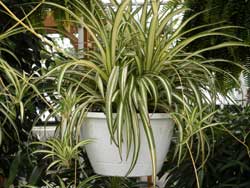
Check the pot size
Is your plant potbound? Does it have crammed roots? Are they wrapped around in circle?
If so, repot in a 1 inch larger size pot loosening the roots so that they can stretch out.
Check for insects
The dry, warm temperature indoors is a perfect environment for spider mites.
To check for mites, look for webs in the axils of the leaves. Place the plant or leaf on white sheet of paper, tap the leaf, see if there are any small black spots that are slowly moving. If so, spray the entire plant and underside of leaves with a safe indoor insecticide. Follow manufacturers directions.
Rotate the plant
To ensure even sun exposure, rotate the plant a 1/4 turn periodically to get a nicely even shaped plant.
Water
Water when the plant is dry- not according to a timed schedule. Water more less often. Meaning-give the plant more water once at a time than small amounts several times at shorter intervals. Use lukewarm water and soak the plant thoroughly. Be sure to drain any excess water from the bottom of the pot. Most plants require moist (not soggy) soil whereas others need to dry out before watering again. In warmer temperatures and active growth the plants will need to be watered more often.
Fertilize
Once temperatures warm up and the plant begins to actively grow, start feeding with a diluted balanced fertilizer or fish emulsion. Water dry plants before fertilizing to avoid burning the roots with fertilizer. Fish emulsion is not as strong as a chemical fertilizer and therefore is less likely to burn the roots or lead to soluble salt buildup.
Propagation
Spring is a great time to take cuttings and make new plants. Cuttings can root in light soil, peat, perlite or water (depending on the plant).
When night temperatures reach 55F, move your plant outdoors for a summer vacation. Slowly acclimate it in the shade and after a week move it to brighter light (depending on the plant).
Now your plant is ready for a new healthy growing season !
From the reader archive
Useful reader questions
Water house plants while on vacation Hi Kris, I am going on vacation for 4+weeks June – July. I have a fair number of plants and no-one to water them while I’m away. African Violets – 30 pots Geraniums – 3 pots…
Read RAY discussionLow light houseplants I was wondering if I could grow a Hosta Plantaingea indoors, since it doesn’t like sunlight, anyway. I am looking for something like that to sit on my kitchen table in an apartment that doesn’t get much sun and…
Read JRubin discussionI have 3 Orchids that have stopped flowering. I have re-potted them in a ready orchid mix, in clear pots, & placed them near a brightly lit window. Is there anything else I should do? When should I resume feeding the plants?…
Read Ray discussionI have a Phal for over 2yrs that is continuously in bloom! I have yet to cut the original spike down & all the new growths have been have been from each subsequent spike. It has grown horizontally, upto 2ft sideways from…
Read Ray discussion
My beautiful peace lily is drooping, I think from overwatering. It had too many people try to help it, now I’m not sure if it can be saved. It has been droopy for a week. What can I do to make it a happy plant again?
All of my houseplants have turned brown on the tips. I also have little gnats flying around them. I have sprayed and no results. What could this be caused by?
WE HAVE HAD AN ARBICOLA PLANT FOR ABOUT FOUR YEARS NOW AND HAS GROWN ALOT. IS THERE ANY MAINTENANCE TO THESE PLANTS OR PRUNING? SOME OF THE BRANCHES ON EITHER SIDE OF THE PLANT SEEM FULLER THAN THE OTHER SIDES. CAN YOU HELP WITH ANY SUGGESTIONS OF PLANT CARE! THANKS ALOT! PEGGY
Hi Kris-enjoy your website! I live in OH zone 5 and my Queensland Umbrella plant is full of tiny little ants. Help!! I had it outside during the summer and just now noticed them, they are mostly in the tray-how do I get rid of them w/out harming the plant. Thanks-Sandy Krausher
.
Could you tell me the night time temperatures the following plants are able to be allowed to remain outdoors in the summer ??
pointsetta
mandevilla
colius
shamrock
and any type of hard green leaf plants from the indoors ??
thanks for the help.. enjoy this site very much
I transplanted an anthurium into a pot twice the size. I put the pot outdoors in the summer all the leaves turned brown i cut them off and took it indoors. It is taking a very long time to grow and does not flower. What did i do wrong?
what type of soil should an anthurium be planted in? I’ve got mine in orchid mix and it doesn’t seem to be doing well.
I received an arbicola about a month ago. Every day it droops more & leaves fall off, some are turning brown. What can I do to bring it back to life?
2007-
Drenda
I have a Pigmy Date Palm and the cold has burnt the branches. Do I trim the branches all the way back to the trunk and if so when should I trim them back?
I want you to know I really appreciate your website. You are a lot of help. I have 2 Pigmy Date Palms and the frost caused the branches to turn brown and die. I fertilized the trees in March. They are starting to get new branches and I can see more new growth in the middle of the trees but they are coming out very slow and some of them have brown spots. Is this normal for these trees. When should I fertilize again? Again thank you for your help.
I have 3 Orchids that have stopped flowering. I have re-potted them in a ready orchid mix, in clear pots, & placed them near a brightly lit window. Is there anything else I should do? When should I resume feeding the plants? (They are all Phals) A 4th Orchid has repeatedly bloomed without repotting or anything special, & the creamy blooms are gorgeous & large! So with the others, am at a bit of a loss as they have no new spikes, but healthy leaves & roots.
Thanks!
I have a Phal for over 2yrs that is continuously in bloom! I have yet to cut the original spike down & all the new growths have been have been from each subsequent spike. It has grown horizontally, upto 2ft sideways from the original stem. The blooms are quite large & atleast 4 to 5 per growth. It is currently blooming again for the 4th time & I was wondering if there is anything I should be doing to make it more manageable. It is also in its orig pot & I can see lots of green roots, but the plant has not yet heaved out of the pot, so to speak! I am loath to cut down the orig stem, fearing I might not get another growth for a long time. Since the plant & its blooms have always been healthy, should I just leave well alone? Another plant given at the same time, bloomed furiously for 18mths & when I finally re-potted it, it died on me; so you can imagine my fear! Thanks for your comments on helping me hold on to this wonderful specimen
Thanks for re-assuring me on my orchid care! Yes, I do seem to do well with them & have infact been given friends’ plants which have not bloomed after the 1st time, & cared them into re-blooming!
Thanks again for your advice.
Is it possible to split a anthurium,because it is getting to big for my pot.
Low light houseplants
I was wondering if I could grow a Hosta Plantaingea indoors, since it doesn’t like sunlight, anyway. I
am looking for something like that to sit on my kitchen table in an apartment that doesn’t get much sun and has fluorescent – maybe from 10 to
1. I have avocado plants with big leaves growing by the window. I alsohave a fig tree, although the leaves are not as lush as the ones growing outside.
Back to the hosta plant – I want one that will not grow too large or wild. I have a giant coffee cup (with a hole on the bottom) and saucer, but I don’t want a plant that will wander off. I used to have little cacti, but they didn’t do too well, and we kept getting poked. If the hosta plant is not feasible, would you be able to suggest a non-light-loving plant for the table?
Thank you very much.
hi thanks for that great article about indoor plants .
Pruning Umbrella tree
Hello, I have an umbrella plant that is extremely large, at least 7 feet tall at it’s highest point,, It’s doing well except for a bare spot on the tallest trunk. The other trunks are pretty gnarled and hang about 3 feet to the side. I would like to downsize this plant and straighten up some for the sake of space but am not sure how to go about doing this. As I’ve mentioned it’s quite large and at this point it’s intimidating me…..
Water house plants while on vacation
Hi Kris,
I am going on vacation for 4+weeks June – July. I have a fair number of plants and no-one to water them while I’m away.
African Violets – 30 pots
Geraniums – 3 pots
Orchids – 7
Spider plants – 2
Poinsetta – 2
Amaryllis – 5 (none blooming)
Callas – 1
Please tell me how to keep them moist for that time! I can’t place them in the bath tub as there’s no light whatsoever.
Would those watering bulbs (which u invert into the soil) work for the larger pots?
I’m most concerned about the Orchids and Violets, as they need regular watering every 7-10 days.
Please help!
Thanks.
Thanks for your suggestions, Kris! I am going to attempt the felt mats for the violets and see how that works over the next few weeks.
I live in Mississauga, Southern Ontario and we don’t get a lot of rain in June. I was planning to place the Orchids in a container with water, where the bottom 1″ of the pot is immersed. I know they don’t like their roots wet, but hopefully they would do ok if it’s only for about 10-14days by which time the water level will drop. What do you think?
What about the Amaryllis, which are single plants in 4″ plastic pots? And Callas that are in a 6″ clay pot? Should I use the globes for them as well?
Thanks so much for your help!
Raynah