Gloxinia care
How to grow a gloxinia plant
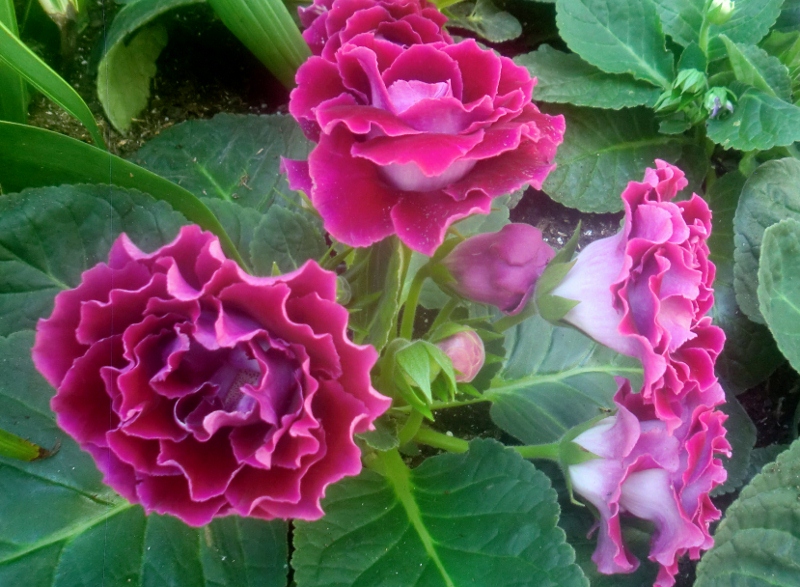
Gloxinia (Sinningia speciosa) has oblong fuzzy leaves, large velvety bell- shaped flowers with ruffled edges. This tender tuberous perennial is a member of the Gesneriaceae family, a relative of the African Violet.
 Plant
Plant
In Dec-March plant the rounded bottom of the tubers 1 inch deep in a light, well drained, potting soil that consists of peat moss, perlite, vermiculite and/or coarse sand. Water lightly until the leaves start to show then increase watering.
Water
Like african violets, gloxinia need to be watered around the base of the plant or from the bottom. With bottom watering, let the plant soak in a saucer for up to an hour and then remove. Do not let the water sit in the bottom of the saucer. Since they are sensitive to cold water, avoid splashing cold water on the leaves or in the crown of the plant. The soil should be kept moist but not soggy and not allowed to dry out.
Care
Gloxinia needs bright filtered light, high humidity, warm temperatures around 70F and in the 60’s when in bloom. Fertilize weekly with a well-balanced houseplant fertilizer when actively growing and during bloom time. Stop fertilizing after bloom.
After bloom care
When finished flowering and the leaves begin to yellow and die back, reduce watering and allow the plant to go into a dormant period. Store the tuberous stem @ 50F in a cool, dark place for 2-4 months in dry soil. When new growth begins to show (Jan-Feb), repot the tuber in fresh soil in a 6″ pot. Move it to bright filtered light and resume watering.
Gloxinias prefer the shade outdoors and bright light indoors.
Troubleshooting problems
Low light will produce long spindly growth and no blooms.
Soggy soil, overwatering can cause crown rot and root rot
Reddish-brown center leaves indicate -cyclamen mites
Deformed leaves with cuts or ragged edges-thrips

I Live in New Brunswick Canada and I have searched the web for months and can’t find a supplier for Gloxnia Tubers (bulbs)..Can anyone help me find these tubers ?? Many Thanks Please e mail me jsteeves001@gmail.com
Hi
I have more than 50 gloxinia plants propagated from the seeds, they are in blooms and flowers all but what has surprised me is that most of them have large and big leaves, so some of them cover the other plants and does not let them grow well, I never ever seen any gloxina in this shape and size of huge leaves, all the blooms are beautiful and differ colors, some of the plants gonna starting dormant period but when I stop watering or decreasing watering new germinates has appeared near the old main stem, so I am forced to restart watering because of these new germinate, what’s the problem and what should I do? thank you so much
Non-toxic
Are this gloxinia leaves or blooms toxic to cats
Gloxinia from seed
I started my Gloxinia’s by seed in June of 2011. I have 33 plants that have graduated to 4 inch pots, now needing 6 in pots. The problem is that they are long! All of the stems seem too long to me! They are not compact bushy plants that I have seen before. They are growing under plant lights about 15 inches away, and my question is when I transplant to the 6 inch pots, can I go deeper to give the stem more stability and stop them from flopping over? I have not seen a “crown” on them, so as to cover it with soil. Praying for help.
Looking for Gloxinia tubers
I am trying to find Gloxinia Tubers for 2 years not. Does anyone know where I can purchase these or order it. I am in SI, NY I do not want the seeds I want the TUBERS and all the colors i can get. I had mine for 15 years and can’t find these tubers anywhere. Thanks
I recently saw tubers at Big Lots (a over stock discount store in Milwaukee–don’ know whether you could order on-line 😐
Hi, where can I buy Gloxinia plants or tubers? Please answer if you know!
My gloxinia is looking sad; buds are forming but the buds and the leaves keep turning brown before they have a chance to fully bloom. From what I’ve read here I understand I may be overwatering (and underfertilizing? I bought from the dollar store a 12-8-8 bag of dry granules that release with each watering, which I applied a month or two ago).
My main question is about the dormancy period- how am I to keep my gloxinia at 50F? I don’t let it get below 68-70 inside in the winter, the refrigerator at 40 isn’t an option is it? I am also wondering how to cool my orchids at night without chilling my whole house. Any advice about localized temp control would be greatly appreciated!
Browning flowers
Hello i have an urgent question to ask. I bought my gloxinia about few weeks ago, it looked amazing with 5 flowers ready to blossom, I have put the plant indoors since it’s winter in my place but I let it out for the sun when it’s possible. Now the flower stems are getting brown like 1 by 1, I cut off the affected flowers, then it spreads to the others, and now the brown thing is affecting other slowly, i was told that there are some micro insects eating out of my flowers. I’m so heartbroken when cutting the beautiful flowers off, please advice what to do:(
You can get them probably on eBay. You can also produce your own seeds as described here: http://www.hplants.com/gloxinia-sinningia-speciosa.aspx
Where can I buy mini gloxinia bulbs or seed?
Buy Gloxinia seeds
Stokes seeds out of Buffalo New York. It takes about a couple of weeks, and cost around $10 for seeds and shipping. Bought some and planted them. Out of 25 seeds I got around 22 plants different colors. Still have around 12, the extras were really easy to give away.
After blooming in June/Julhy my gloxinia is still green and not turning yellow. Do I leave it alone and let it go limp to make it go dormant or wait?
Powdery mildew
I purchased a Gloxina about 6 weeks ago and have it on my deck. It is growing and flowering beautifully. However, there are white spots on the leaves that I can rub off, but they keep coming back. It does not seem to be causing any harm to the plant. I’m wondering what they are. We seem to have a bumper crop of spiders and have many, many spider webs every morning and lots of spider cocoons along the ceiling. Might these spots have something to do with spider webs?
Overwatering
I purchased a beautiful gloxinia to contribute to a fund raiser for the Boy’s Choir in out area. About 3 days ago I watered it maybe too well and now it is drooping terribly. I removed some of the leaves which were browning and looking torn and had some holes. (they were not like that when I purchased it). It has been in indirect sunlight, but our temperature is so hot these days, that even with air conditioning the temp. hovers around 77 in the day time and 72 at night. I have a feeling it has been too warm for it. I don’t really have a way to keep it at the recommended temp. I have been reading about.
Now that it is drooping, what shall I do with it. It looks like it is dying, but I want to give it a chance to “bounce back”. Also, it has been in the foil wrapper around the container. I have just decided that is a problem, so have taken it out of the foil wrapper and put in a saucer.
Shall I leave it alone, or trim back the drooping stems?
Thank you.
Mary Lou
Gloxinia sucess
I bought two gloxinias last spring and summer. I kept them all winter long in a west window(Ilive in MI) they lived all year in their pots and one of them has grown to over a foot and has a dozen blooms!!! I cut off some offshoots(stems & leaves) and put them in water and after a couple of weeks they have tons of roots in water! Not only have I succeeded in keeping them all winter and they are reblooming as well as I am propagating them! I plan to plant the rooted plants and stems in soil in the next few weeks!!!
Curled leaves and stunted growth
I have a had a gloxinia for several years now and last year and this year it is growing out of it’s dormancy like normal but both time the leaves are curling under and don’t grow as big as they used to. It is planted in an african violet pot with bottom watering, fertilized with continual feed in the water and plenty of light in a sunroom but not direct sunlight. No drafts, daytime temps in the 70’s and night in the high 60’s. What am I doing wrong? It was repotted a couple of years ago.
Non toxic plant
Can you please tell me if the leaves on Gloxinia plant are poisons that can hurt a baby?
I’m thinking of getting this plant. Does it go through the dormant period in tropical climates?
Limp leaves
I did the same thing Cindi did. Received the plant, watered a few days later, and the leaves and flowers went limp. Do I repot right away or just let it dry out to bring it back? Or have I killed it…I am not good with houseplants.
I purchased a beautiful purple/white gloxinia a week ago Saturday in Wisconsin. The lady at the nursery told me a self watering clay pot would be best for it and she potted it, fertilized it and put pebbles on the top. One week later, I added water to the inside of pot that the plant was sitting and I used lukewarm water. By the end of the day, the plant collapsed. Did I add too much water? Is there any way to save it now, it was so beautiful. I live in Illinois and can’t find them around here!
Did you pour the water inside the crown of the plant?
No, I put the water in the bottom of the self watering container and put the potted plant container within the container holding the water. In the meantime, I have removed some leaves, put them in soil and they perked up a bit. I am starting to think it’s the self watering container because I added a bit a water and now the leaves seem soggy. Any other advice besides replacing the whole plant?? Could the leaves even reproduce a plant?
I was given a Hardy Red Gloxinia and want to plant it outside. We live in San Antonio Texas and winter is about 2 months long, freezing temp lasting few hours at night. Has anyone planted gloxinia’s in this area?
Hi….Just bot a gloxinia today for myself for mothers day. wanted to plant it outside but not sure when to or how to. also when should it be brought inside? not good with plants or flowers but would really like to keep this beautiful one!
not sure….it says gloxinia on the pot. lol. it’s big red bell flowers. i’m in wilno, ontario…not sure what growing zone that is:)
I ordered Gloxinia seeds they are very small I ordered 3 sets. how many do I plant in one pot I have empress Mix Gloxinia, Jester Mix Gloxinia, Brocade Mix Gloxinia, do I plant all 25 seeds of one variety in one pot? Yes I’m new at this but I love Gloxinias can you tell me where to buy some bulbs in the Southwest Florida area.
WHERE CAN I BUY GLOXINIA TUBERS? I HAVE SCANNED MANY OF THE MOST POPULAR
GARDEN CATALOGS, BUT THEY SEEM TO BE DISAPPEARING FROM THE MARKET. THEY
ONCE WERE SOLD BY SUCH NURSERIES AS BURPEE, OR PARKS SEED,
It says rounded bottom of the tubers what is that.
I have a beautiful GLOXINIA and would like to restart another slip from it how do I do that.
Can you start one from a leaf as with african violets.
I have an indoor gloxinia with 2 long vines that only have leaves at the end of the vines. Those leaves are all very small and keep dieing as the vine gets longer. Can i cut those off and try and start new plants? If so, in water or soil?
Also, how often are you supposed to cut it off and store it for the 2-4 month rest period mentioned above? It hasn’t bloomed for a couple years now.
I have a miniature gloxinia. Do you have any information about it. I would like to enter in the flower show but I need information on the plant to enter. The plant is about 25 years old and flowers beautifully every year.
NEED WATERING SCHEDULE AND POTTING MIX TO REPOT PLANT
I ahve a Gloxinia that was given to me by an Amish person. I have stored it in the basement like I was told and then forgot about it-I had surgery and wasn’t able to use the stairs. I brought it up and it is all dried out, have I killed it? If not, what do I need to do to get it to bloom its beautiful purple flowers? Please let me know ASAP!
Thank you, Pam
After the plant goes dormant , you don’t water it? How long does it stay dormant? I may plant this outside after it gets warmer. I am known for killing plants.
Thanks,
Pam
Gloxinia – My gloxinia is growing off center and extremely top heavy. Can it but cut back and how?
We just bought three potted gloxinia. My husband plans to transplant them outside. Is this a good idea and will they make good perennial garden plants?
I have a gloxinia plant that I bought 3 weeks ago. I put it in a clay pot. When I looked under the pot, I saw there was a fluffy cotton like substance growing from the bottom of the pot. I was able to easily remove it. What is this?
I have a Gloxinia plant that is trying to bloom and the petals are turning brown. The blooms are tight together and won’t unfold. What must I do? Erma