Thrips are tiny, narrow insects with feathery wings which are difficult to detect. The adult female will lay eggs on the leaf surface. Once they hatch they suck the juices out of flowers and new leaf shoots. One generation of thrips will live about two weeks and continue to multiply thru the season producing several generations. To test your plant for thrips shake and infested flower head over a piece of white paper and you should see dark fecal pellets and white dead plant tissue. Another way to monitor for thrips is to hang blue-colored sticky traps by the plant. Yellow traps will also work. The sooner you spot and treat the easier they will be under control.
Thrips attack dry, stressed plants. They will feed on leaves which will be flecked white and have black specks on the underside of the leaves. Their favorite targets are light-colored flowers such as white, blue and yellow. Infested flowers will become discolored and disfigured and the buds will turn brown, dry up and die. Damage can look similar to spider mites infestation. The added bonus is that they can transmit viral disease.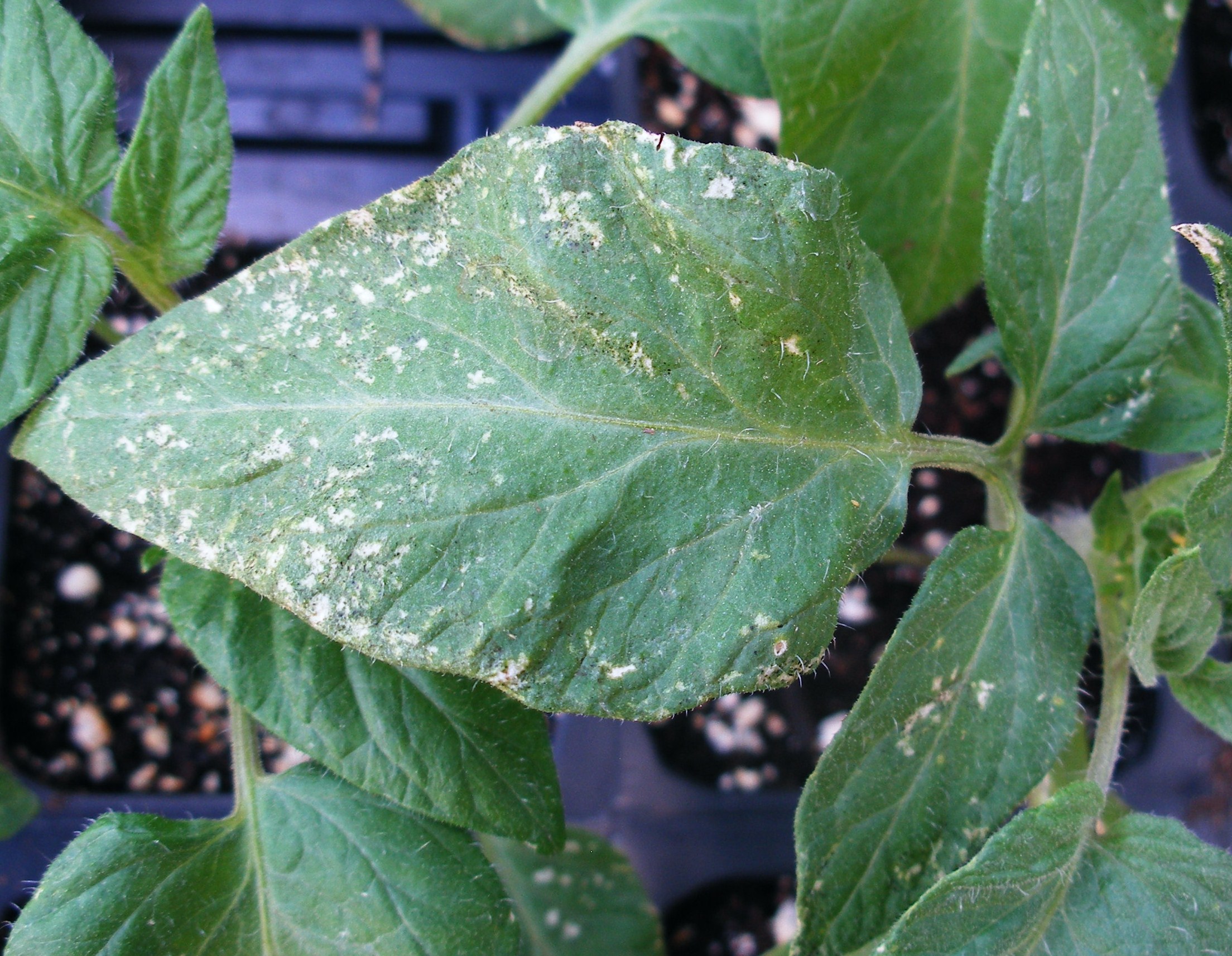
Control
Other than disfiguring the plant, thrips should not kill a healthy plant. The best way to approach this problem is to remove the infested flowers/buds and spray with insecticidal soap twice a week for 2 weeks until they are under control. Since they like dry conditions keep the plant moist not dry. A garlic spray can also be effective in repellilng thrips. Mix 1/2 cup of finely chopped garlic in 1 pt of water, strain and spray every few days for 2 weeks. Persistance pays.
A spray that contains spinosad (Conserve) is a biologically, safe organic insect killer which you can apply directly on the flowers and leaf buds. It works by contact and by injestion and will not harm most beneficial insects or predatory mites. Neem (botanical) will also work.
A systemic such as Orthene will give you long term control. Orthene is not environmentally friendly since it will kill all insects even beneficial ones. Extreme caution should be used during application.
Plants affected by thrips: tuberous begonia, dahlia,daylily, gladiolus, hollyhock, iris, peony, rose, tomato.
Great blog. Thanks for the interesting article. I will send this story to my friends.
I have been spraying for aphids every year on my caragana but I think I may have a thrip infestation. Tiny white specks about the size of piece of flour on the underside of the leaf and then a shiny gooey looking substance on the top of the leave.