Container gardening
Container gardening offers a wide range of gardening possibilities especially for those enthusiastic gardeners with limited space. Any container can serve as a planter as long as it can hold soil and have drainage, let your imagination go wild; but container gardening is not just filling a container with soil and adding random plants. There are a few planting tips to consider that will reward you with a healthy, long lasting planter all season long. 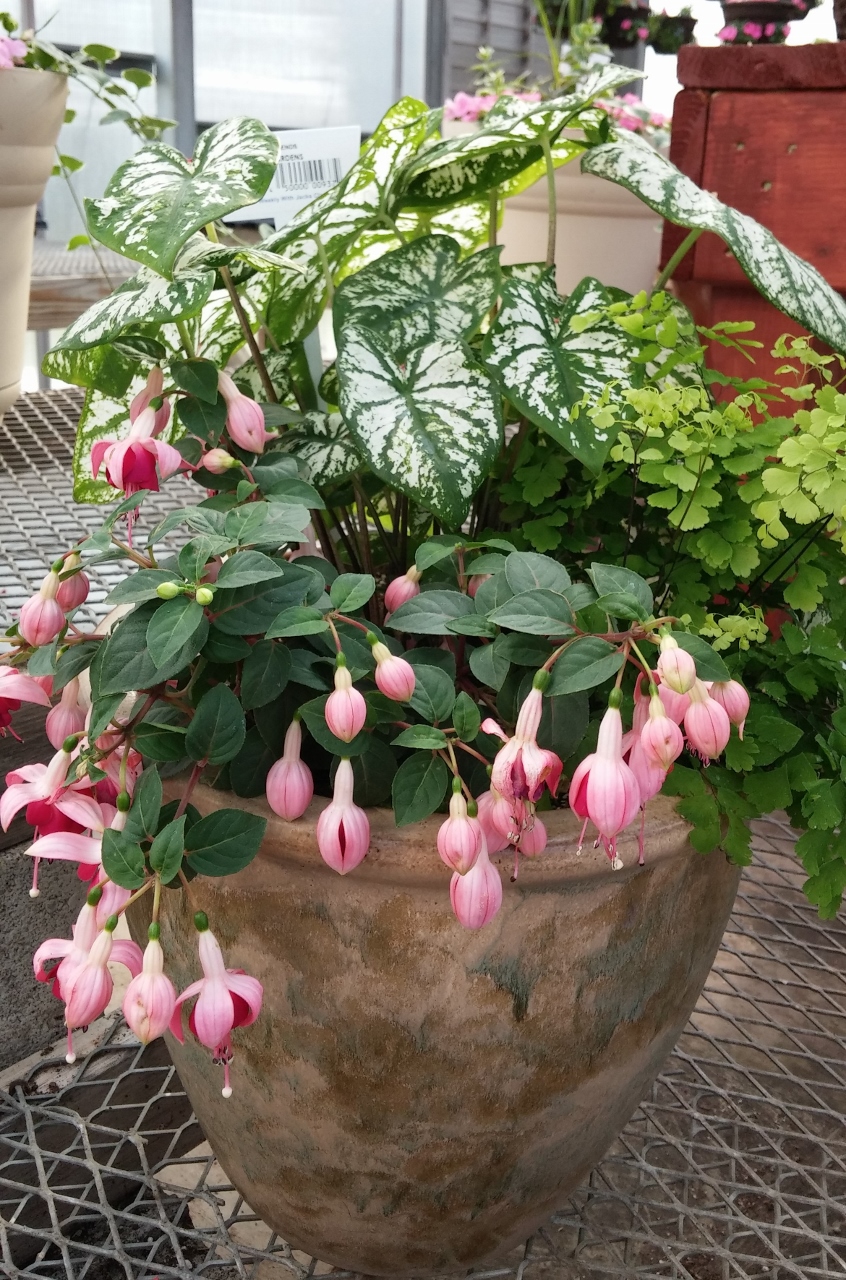
Here are some tips & techniques when planting your container:
Choose plants that are compatible with size, color, light and moisture requirements.
– Start with a container that is large enough to maintain the plant or combination of plants through the whole growing season. If the container is too small it will dry out much faster during the hot days of summer. The bigger the better-but also keep in mind that you may have to move it. Clay pots are heavier, porous and dry out faster than metal, plastic or wooden pots. I like the faux clay pots. They seem to fit all requirements.
– Be sure your container has adequate drainage. Place a fabric filter or mesh over the drain hole and fill bottom of container with gravel, broken clay pots and peanuts to fill the space. Leave the top 8-10 inches to fill with soil.
– Healthy plants start with healthy soil. Use the good well drained soil, or mix your own by combining 1/3 peat moss, 1/3 vermiculite or perlite and 1/3 organic material Fill the container 2 inches below the rim of the pot to allow room for planting and avoid overflow when watering.
– To conserve moisture and reduce amount of watering add a water retaining polymer (Hydro-gel) to the soil. Soak the polymer before adding it to the soil and follow label directions as to how much to use. Do not use any water polymer when growing vegetables and herbs in a container.
– Mix in a slow release fertilizer (Osmocote) that will feed your plants up to 4 months, enough to carry you through the growing season. Supplemental fertilizer may be required especially with vigorous growing vegetables as frequent watering will leach the nutrients from the soil.
Grow tomatoes in a pot: http://hortchat.com/info/tomatoes-in-a-container
Grow herbs in a container: http://hortchat.com/info/growing-herbs

I built many large self watering containers from a website offering the plans, where one container is fitted into another after a small pond basket is attached to the bottom of the inside one. The completed project provides a water chamber on the bottom, with overflow holes to prevent overfilling, and a planters mix bed in the upper container where the pond basket, also filled with planters mix, extends into the water reservoir. Water is added through a pipe directly into the lower container. I have blossom end rot on many plants and suspect the watering situation. I added lime to the mix bed before planting. Any suggestions?
Central Illinois questions about time of day to water and fertilize container grown tomatoes, peppers, zuchinni. Also what ratio of fertilizer.
These containers are in full sun.
I am in Wisconsin.
I have container grown peppers.
The leaves are turning brown around the edges only, as if they are burnt.
Ideas, please?!?!?!
Container gardening
Can I plant pumpkins in a container? If so, when should I transplant it?
I have obtained a couple of whiskey barrels from my local distillery. I was wondering if there was anything special other than cutting, cleaning it out, and letting it dry out that I needed to do to make them planters.
Jim H.
Can someone please give me instructions on how to make planters out of discarded car tires? Thank you.
What fruits and vegetables can be planted in pots for city gardening?