Growing Clematis
CLEMATIS
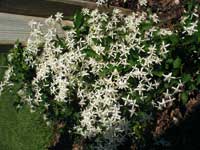
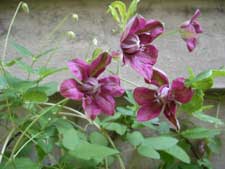
Rumor has it that clematis vine is difficult to grow. Given the right location and a little know-how clematis is a relatively easy vine to grow which will reward you with a beautiful splash of color when in bloom. Clematis is grown in many parts of the world and comes in a rainbow of colors and unusual shapes and sizes.

Culture
Since they like cool, moist roots and their heads in the sun, plant them in full sun or filtered shade in a rich organic, well-drained soil with a ph around 7.0. Dig a hole that is 18″ deep and 18″ wide. It should be large enough to set the crown 2-2 1/2 inches deeper than its original container. This will help promote good root development and a stockier plant. Add organic material or compost to enrich the soil. Clematis can be planted with shallow rooted companion plants (annuals & perennials) so that they can shade/mulch the roots during the hot summer months. Water deeply and regularly during the growing season especially in hot weather to maintain moist roots. Clematis are heavy feeders, fertilize in early spring when buds are 2 inches long then every 4-6 weeks with a rose food except when flowering. Be sure to provide some kind of support for the vines to grow and climb on.
Pruning
It is important to prune Clematis to keep it in bloom. Different types of Clematis have different pruning times. If your clematis flowers before end of June, it blooms on old wood (last year’s growth) don’t prune in the spring, cut out only dead stems to the highest new leaf axils, just above a pair of swollen fuzzy buds. Prune early bloomers after flowering. Remove dead flowers and cut the length of the stems to force new growth. For late bloomers, those that bloom on new wood (current year’s growth) prune in early spring before new growth starts and cut vines 6-12 inches above the ground to encourage vigorous new growth and continuous flowering throughout the season.
All new plants should be pruned hard to 12-18″ the first spring after planting to establish good base growth.
When you plant a Clematis be sure to note what variety it is so that you’ll know when to prune it.

I have a group 2 clematis Elsa Spath, which is covered in buds, now end of January. I usually prune it, as it advises, back to strong buds in February. This means lots of buds will be cut off. As this flowers on the previous year’s growth, I’m wondering if I should really prune it after it flowers in summer, which I do with my other spring flowering shrubs, it Forsythia, Ribes, Philadelphus. Can you advise
Hi Rita
It’s great that you know which clematis you have because that will tell you when to prune it. Elsa Spath blooms twice a year in early summer and again in autumn. It blooms on new and old wood placing it in group 2. Prune in late winter or early spring but not too much. Prune after the first flush of flowers in early summer to encourage new growth and more flowers. If you choose not too prune late season, then hard prune them to 30-90cm (1–3ft) from the base every three or four years in late winter (as for pruning group three). In the first year after renovation, they will only flower once.
Prune out damaged or dead wood and lightly prune the portions of the vine that bloomed. This pruning keeps it in shape and keeps it from getting bare legs.
Hi. I have a clematis Josephine that was cut off about 2inches from the ground with a lawn mower or weed eater. Will it come back. What can I do to help it. I am trying to start cuttings but I don’t really have a green thumb. Thank you.
dividing clematis
I am being given a well establishede
Clematis.
Can the root be split?
How deep should I expect the root to be?
Thank you
great site, bought some tiny and I mean real small plants last year and planted with my other clematis, hard to tell which is which now. Wondering how old or big does a plant need to be to bloom?
i have several new clemetis vines. while all are producing new growth, the leaves on two of the vines are turning under. so far they are not turning brown or the stem dying, but i was wondering if the leaves had developed a fungus as I read above or if the plant was not receiving enough water at the root. is it common for the new clemetis vines not to bloom the first year?
Hi everybody, I am confused. I can’t diagnose what is ailing my numerous clematis'(or is plural clemati?). It sounds suspiciously like it is clematis wilt, but the symptoms for too dry a site also can cause the same, but with the leaves turning black not brown?!*!? My thoughts are to put a wooden doweling into the soil beside the plants and then I can tell how wet the soil actually is. Does anyone have any suggestions the can be more conclusive or any suggestions on how I should proceed. It started with my Josephine, which was moved last year, and now seems to be affecting them all, from Princess Di to the Multi Blue and Nelly Moser. Also this year in Toronto I have an infestation of aphids which have moved from my lupines to my Roses and now it the younger clematis’. I have been spraying with a dish soap and water solution daily. HELP!!!!!
I have a marie louise clematis. This year all the petals did not open. Had many buds and blooms and then all the leaves turned brown and crispy. Had a very wet spring. Also should I cut it back now that is is finished blooming and looks dried up?? Tnanks deb
I have a 15 year old hardy Kiwi plant which had become so overgrown and viney that it had to be pruned way back two weeks ago before any new growth appeared. The cut stems are still dripping sap continuosly. A yellow fungus type growth has developed around the cut areas.
1. Should I have sealed the cut ends with something?
2. What is the yellow growth and what do I do about it.
3. Will the plant still live?
4. Should kiwi plants be fed anything or pruned in a special way to encourage fruit?
Clematis wilt
I inherited a Clematis of unknown name when I rented this apartment a little over a year ago. The first season it bloomed very little. This year it bloomed a little better, but from the advice I have read here, I believe it has clematis wilt because lower parts of the stem will turn brown and dead looking while the top of the stem is green and maybe blooming. Can I cut it back to the ground this fall and start over with new growth in the spring. It is a lilac color and blooms in May and then again later. I want to save it if I can before trashing it and buying something else. I was told it did very well for the previous owner.
I was given several different Clematis as house warming gifts. I have never grown these plants and am apparently dioing something wrong. I have them planted in pots but there has been no new growth. I fertilize with Rose food, water every other day, 8 hrs of sun daily with roots covered. I have tried moving them around about once per month for the last 4 months .. but no new growth … any suggestions?
Hi, I just planted an overgrown Sweet Autumn Clematis by my mailbox that I bought on discount at the nursery. I pruned it down to about 3 feet, but I’m wondering if I should prune it harder. Also, this clematis will be the anchor of my ‘mailbox garden’. Can you suggest any good companion plants for a 4’x4′ area? Thanks so much!
Clematis wilt
my marie louise clematis was given to me last year i thought it was dead but i pot planted it & this year it came back it was doing quite well i had it in direct sun then in a matter of a day or two it died what would have caused that? could it have been to much sun?
Clematis wilt
My clematis are in bad shape. In the height of bloom, the flowers and leaves looked as if they had been srayed with something toxic. Brown splattered looking spots appeared and the plants are in decline. Buds that were forming wilted and died. Leaves appear to be drying though the soil is moist. Helebores planted at the feet of the vines are doing great. Maybe a fungus? Plants are only a few years old and not well established, though they did extremely well for the past two seasons. Should I cut them to the ground? This blog is extremely helpful to me. Thank you so much for sharing your knowledge and advice.
I live in TX (ie. . . very hot summers) and am trying to figure out a way to shade the west side of my house, especially the door, to help reduce air conditioning cost. Plans are to build a arbor/trellis over door and cover with vines. Would a clematis do here? Wondering if the hot afternoon and evening sun would be too much considering they like their roots cool. Any other suggestions would be appreciated. I really need a fast grower and I realize clematis isn’t going to be that fast, but I do love the looks of them. Oh, I have planted tall sunflowers about 8 feet from the door, as of tonight they are about 1inch tall. (It may take awhile.) Help me solve this please. And Thanks!
I have a large blooming clematis that produces the flowers right on the vine without a stem for the flower. Also the first few flowers were right at ground level. The flower was the first thing showing, with no vine in sight. Is this normal? I pinched off the flower on the ground to encourage the vine.
I have a Clematis ‘Vanso’, planted it last spring. Don’t know if I should prune it back this spring. There are already signs of budding on the old vine and new growth coming from the ground.
2007-10-23 Reba Adams
I have a clematis that is planted in a bed next to our concrete drive-way. It blooms once in the early spring, and then nothing. The vine turns brown. It does have sun most of the afternoon. What do I need to do to have a healthy plant all summer?
The location may be the problem. A concrete driveway and afternoon sun can get pretty hot in the summer. Clematis like their roots to be cool and shaded. Try
Are you supposed to deadhead an spring to fall blooming Clematis?
I live at Fargo, North Dakota how do I prepare my clematis for the winter months? Do I cut it back or just cover the roots well? Thank you Cheryl Long
In you web-site you mentioned fertilizing with a Rose food. I feed all of my roses 10-20-10 and want to know if this is okay for my Clematis and how much.
Diane
Kris, I have a question about our clematis. We live in WA state and it’s about 3 years old now and does great. Only thing the leaves seem to turn brown too fast, like when the flowers are in bloom. It is planted deep, but I am wondering am I not watering it deep enough? I do use Miracle grow on it, is this wrong?
It is growing good now, but just starting to spread out.
Thanks! JoAnne
8-21-06
I have a question about my clematis vine. The flowers are little pinkish/purple ones but there are these huge pod-like green things growing too, what are they? Theresa
Last fall I planted two sweet autum clematis. They grew to about 2 foot tall and have stopped. The planting spot is sunny, I have watered and fed. What should I do to get these vines to grow and flower? Thanks!