Summer blooming bulbs
Bulbs are not just for spring. Summer blooming bulbs can be the perfect colorful addition to any container, flower bed, garden or hanging basket. They provide dramatic foliage, attractive blooms and fragrance when combined with annuals and perennials. Some, such as gladiolus and dahlias are also suitable as cut flowers.
Summer-flowering bulbs (which can be bulbs, corms, tubers, rhizomes and roots) are tender plants that die with freezing temperatures and should be planted after the last spring frost and need to be dug up and stored for the winter.
In cooler climates, give them a head start indoors, 4-6 weeks before planting outdoors. They can also be planted directly in the ground after the last spring frost.
Before planting outdoors work up the soil especially if you have heavy clay. Add organic material such as compost to enrich the soil and provide good drainage. Water deeply and often during the growing season. They need at least 1 inch of water a week from rain or watering. Add a 2-3 inch layer of mulch to help conserve moisture and keep the roots cool.
Here are some favorite summer blooming bulbs:
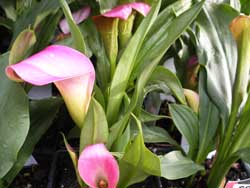
Caladium: The dramatic heart-shaped foliage comes in variegated leaves of green, pink, burgundy, red with white markings. They can get up to 2 ft tall. Plant the potato-like tubers in moist well-drained soil 1 inch deep or start the plants indoors 8 weeks before last frost date. They grow best in shaded areas protected from strong winds. ‘Miss Muffet’ is a shorter cultivar.
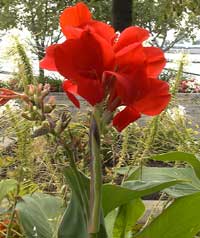
Canna:Grown for its tall, tropical, banana-like foliage that produce 6 ft stalks of brightly colored torch-like flowers. Plant the rhizomes in full sun, well-drained soil 4-6 inches deep.
Dahlias: This tender tuberous root is grown for its showy composite flowers that come in a wide range of colors and sizes. Plant the tuberous roots 6-8 inches below the soil surface with “eyes” pointed up and spread the fleshy roots out. Initially, cover the buds with 3″ of soil and fill in as the shoots grow up. Grow in full sun-part shade and rich, well-drained soil. To encourage large flowers leave the terminal bud and pinch off the side buds. Dig up the tubers after the plant has been blackened by frost, cut the foliage back to 4″, let it dry out for a few hours and store indoors for the winter. Hardy in zone 9-10
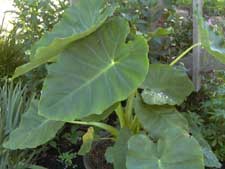
Elephant Ear: Colocasia esculenta is a tropical tuber that produces corms. Grows 3-6 ft. tall and produces huge elongated heart-shaped leaves 2-3 ft. long in green and purple. Start the tubers indoors 8 weeks prior to the last frost date. Plant it in rich organic soil covering with 2 inches of soil. Plant outdoors directly in moist soil in full sun (North) to part shade (South). It is grown as an annual except in zone 8b-11. Provide ample moisture during the growing season and feed with a balanced fertilizer.
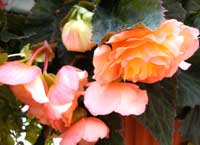
Tuberous begonia:
Plant tubers hollow side up 1 inch deep in well-drained organic soil. Plant starter plants at the same depth as grown in the container in filtered shade. When watering, allow plants to dry before watering again. Remove faded flowers for longer bloom time. T.begonia, prized for its colorful camellia-like flowers is an ideal plant for hanging baskets and containers. Dig up before first frost.

Hardy zone
Ahhh. Star gazer lilies. We had a million is Seattle. Moved to Bolivia, NC and have not seen any since. Will they survive in SE North Carolina and where can I buy some?
can I plant canna lilies in the fall? I live in GA and have an area of full sun to plant.
What is the best way to store Oriental Lily bulbs during winter. Thank you, Patricia
My arch-enemy woodchuck at all of the 3 leaves off of the first elephant ear plant I’ve ever planted. Including leaves it was about 2 feet tall with 3 leaves and a 4th tender leaf. He ate the 3 leaves in one day, then came back for the last leaf yesterday.
I caught the woodchuck in my Havahart trap last night…yeah! So now I’m wondering…..do I have any hope to recover my elephant ear plant without any leaves on it? Should I cut it down or what? Thanks in advance for any advice.