Plant Care & Gardening Tips@ HortChat.com©


Bleeding Heart

Filed under: — admin @ 6:05 am


BLEEDING HEART (Dicentra spectabilis)
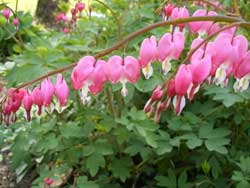
A native of Japan, this beautiful delicate perennial produces arching branches with sprays of dangling heart-shaped flowers that are pink with white tips or solid white. The plant will bloom in the spring through summer and once established is relatively trouble-free. Bleeding heart is hardy to zone 3 and 4 and will tolerate the cold winters in Northern states.
bleeding heart

Care
Bleeding heart can be planted in the spring or fall in moist, rich, well-drained soil and in semi-shade to shade. Plant it in an area where is gets direct sun early in the day and avoid the midday full sun, as that will cause the foliage to dieback prematurely. Maintain even moisture during the growing season. If needed place a layer of 1-2 inches of mulch around the plant away from the base to keep the soil evenly moist. When the hot summer sets in, the foliage will turn yellow, die back and go into summer dormancy.
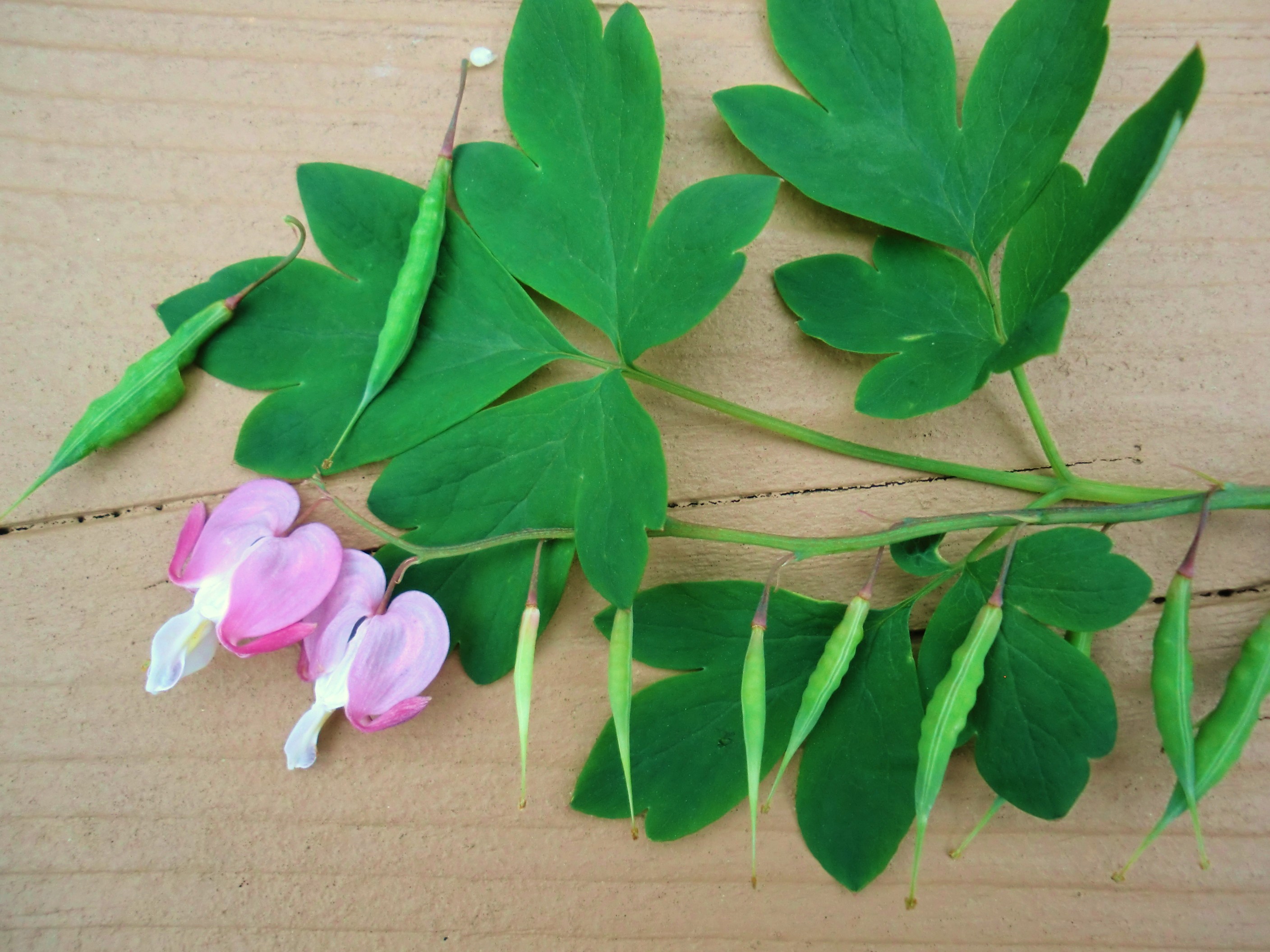
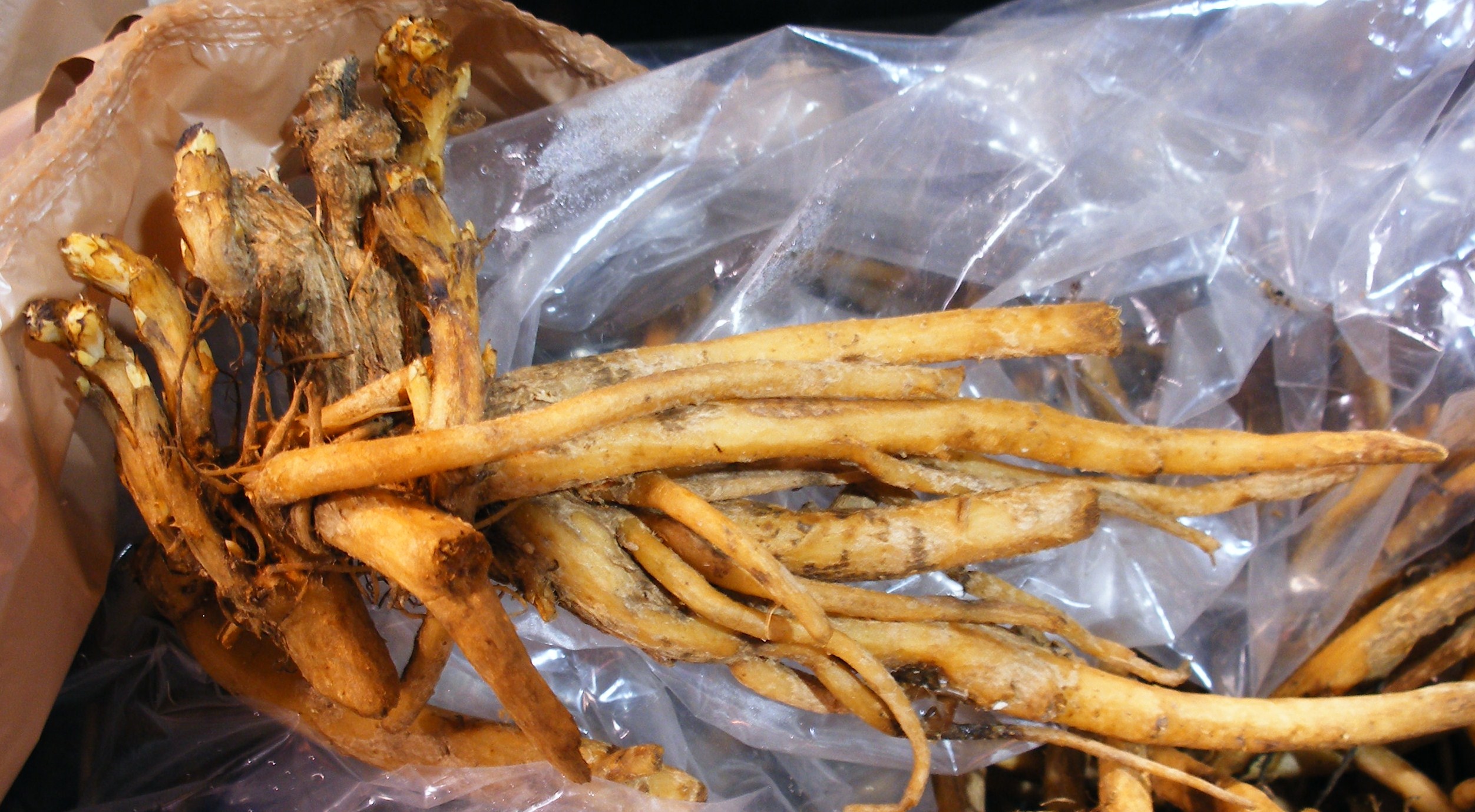
Divide the plant in the spring every 5 years to reduce overcrowding and produce new plants. You can also divide in the fall after the foliage dies back. A mature plant will produce seeds making more give away plants.
Bleeding heart is relatively disease free except for wilt and stem rot caused by a fungus from growing in water-logged, wet soil.

All parts of this plant are poisonous.

Tell a Friend or Foe about this 'Bleeding Heart article'

Bookmark this thread on Bleeding Heart

previous post: Jasmine polyanthum
next post: Norfolk Pine


17 Comments on Bleeding Heart»

  1. I’m trying to plant Bleeding Heart “bulbs". They look like dried up roots. I can’t tell “up from down!". Any clues?

    Try pointed (tips) down. Although the roots shouldn’t be dried up. They should be somewhat fleshy.

    Comment by Dixie — 4/19/2006 @ 6:19 am

  2. I planted red and pink bleeding hearts last year and they came up white this year,do you know why

    After some research and discussion with several sources, we came up with one solution that made sense.
    The pink bleeding heart (Dicentra sp.) is the dominant gene and it is highly unlikely that it would revert to white. (the weaker gene).
    The most logical solution came from the Master Gardeners, who suggested that two plants (pink&white) may have been planted together and only the white one survived.

    Comment by Cathy — 5/6/2006 @ 6:14 am

  3. I would like to know if I put a Bleeding Heart in a large pot, will it do well?

    Should do ok, but it will die back from the heat by mid summer and go dormant. Keep it evenly moist and the foliage will stay longer

    Comment by Maggie Downing — 5/13/2006 @ 6:21 am

  4. I have 3 huge bleeding heart plants on the side of my house that overgrown. If I cut them back, seperate them and transplant them elsewhere will the plants be smaller when they grow back the next year? When I dug on to share the plant it was all roots. can I take the roots cut them, plant them and have a full bloom the following year?

    The best time to dig them up is in the early spring, although it is also possible in the fall. Space them about 2 feet apart. It’s good to divide them every five years or more to prevent overcrowding. I dig mine up with a part of the root system and a new green sprout and plant in pots or in the yard. Since the fleshy roots are brittle, dig up clumps of 6 inch in diameter. The more mature the plant is, the better chance you have of it blooming the following year.

    Comment by Dawn — 6/13/2006 @ 6:12 am

  5. my bleeding heart is yellowing what can I do?

    That’s normal. They die back in late summer and will return next spring.

    Comment by Jackie — 2/18/2007 @ 8:54 am

  6. I’m trying to start a bleeding heart root in a terra cotta pot, unfortunately, I buried the whole root and did not leave the crown above the soil. Will it even grow now? It has only been in the pot a few days. Also, if I do leave it in the pot as is, how moist should the root be before it comes up?

    The crown should be planted at the soil line,or the same depth that it was growing at, otherwise it may just rot. I would suggest you dig it up and bring the crown up to the soil surface. You will have better chance of success. Keep the well drained soil evenly moist -not wet.

    Comment by Sadie — 2/22/2007 @ 11:14 am

  7. I HAVE A BLEEDING HEART PLANT AND
    IT WAS COMING ALONG GOOD UNTIL THE
    FROST GOT TO IT. DO I CUT IT BACK, AND
    WILL IT GROW THIS YEAR?

    THANK YOU DEBBIE

    Debbie,
    Just leave it for the time being and see how much damage it incurred. If it is a mature plant, the roots probably did not freeze and it should continue to grow new leaves when it warms up. Your frost bit leaves will become unsightly and eventually you can trim them later in the season.

    Comment by Debbie Smit — 4/9/2007 @ 12:05 pm

  8. What can I co-plant with my bleeding hearts that will come up when the plants die down in the summer?

    You can combine any shade/semi-shade plant with your bleeding heart. For starters try, astilbe, hosta, goutweed, wild ginger, periwinkle, pachysandra, iris or forget-me-not. Add some colorful annuals such as impatients, begonia, coleus which will fill in your shady garden nicely after the bleeding heart has died back.

    Comment by Julia — 4/14/2007 @ 4:19 am

  9. Can a bleeding heart be divided in spring once leaves are already up?

    thanks!

    It depends on how far along the plant is. If the leaves are 3″ high that should be ok. If the plant is fully opened then your chances of a successful division is reduced. The plant has used up all its energy to emerge. When you divide a fully leafed out plant, the stressed roots cannot support all the leaves. If you try it, do it on a cloudy, cool day and water the plant before dividing. Place the division in a cool, shady spot and water well, keeping it moist until you see signs of new growth.

    Comment by Sue — 5/12/2007 @ 6:17 pm

  10. I MOVED INTO A HOUSE THAT HAS A BLEEDING HEART THAT NOW( MID MAY) IS IN FULL BLOOM IT IS ABOUT 2 FEET TALL AND 3 FEET ROUND, WHAT IS DIVIDING? IT HAS TAKEN OVER THE AREA WHERE PLANTED AND I WOULD LIKE TO SPREAD IT AROUND I KNOW PRUNING WONT WORK SINCE IT DIED DOWN LAST YEAR AND COMES BACK BIGGER EACH YEAR
    THANKS
    M

    Dividing a bleeding heart is digging up a section of the plant with a root system. Be careful how you handle the roots as they are brittle and break easily. Division is best in early spring just as new growth appears but you can also do it in the fall. From the size of your plant, I’m sure you will also find seedlings in your flower bed that you can transplant.

    Comment by mark — 5/16/2007 @ 3:52 am

  11. Every time I try to transplant a piece of bleeding heart it dies. What am I doing wrong.

    The best time to transplant is in early spring, when the plant is 3 inches tall and leaves are just coming out. A fully leafed out plant uses up a lot of energy to get to that point so when you dig it up and disturb the roots, it has a hard time maintaining all those leaves. When transplanting make sure you water it in well and that it stays moist and not allowed to dry out. Try a transplant fertilizer which helps speed up root development. Also consider the area-is the soil well drained? Is it in semi- shade? If you have small seedlings growing around the mother plant you can transplant those at anytime. I have had good luck with digging up the very young seedlings and growing them in a pot until they get a good root structure. Hope this is of some help to you.

    Comment by Rose — 5/23/2007 @ 1:38 pm

  12. I just recently bought a bleeding heart with the fern like leaves and it was doing okay and now it looks like it has shrunk and is drying up. I need help because I don’t want to loose another one. Please help!
    Thanks a bunch,
    Cindy from KY>

    Hi Cindy
    It may be possible that your bleeding heart (Dicentra eximia) is planted in the wrong spot. It may be too dry, too hot, too much sun (prefer light shade). They don’t like clayey or waterlogged soil but need rich, well-drained soil. New transplants need extra TLC until they can establish a good root system.

    Comment by Cindy Berry — 5/26/2007 @ 6:15 pm

  13. My bleeding hearts are huge plants and though gradually yellowing, not dying back very quickly. The hostas and astilbe around them are somewhat buried by the foliage. Would it be OK to trim the bleeding heart foliage enough to get them more light?

    If the bleeding heart is starting to yellow then you can trim it back. If not you can still trim it back, as long as the plant is well established, I don’t think it will harm it and your other plants will be happy. I just did the same thing. I cut back my yellowing bleeding heart so the annuals I planted in front of it can get more light and bloom.

    Comment by Sharon Aleckson — 7/4/2007 @ 6:48 pm

  14. I planted a white bleeding heart about 3 or 4 years ago. It always comes up, and grows bigger each year but has never had many blooms. Any suggestions? I live in Seattle and the plant gets very early morning sun and very late (6-8 pm) afternoon/evening sun. I have hostas, hardy fuschia, salamons seal, columbine, toad lilies, fox glove, and monks hood in the same garden. All do well.

    Comment by Pamela — 9/24/2007 @ 6:40 pm

  15. I have 2 bleeding heart bulbs to plant and they just look like dried up roots. I can’t tell where the crown is. Help!

    Look for a growing point or an eye, if you don’t see it, plant the bare-root pointed tip down and 1 inch below the soil surface.

    Comment by Renee Cory — 10/7/2007 @ 6:57 pm

  16. I live in RI and have a Bleeding Heart that is a georgous plant and the mother of many plants handed to many family and friends. We cut it back each yr when the leaves turn yellow and it comes back bigger and better each time. This past winter I brought home a piece of my mothers that came from FL. It’s different in that it has a more woody stem. I have planted it in a large pot and it has grown well all summer but I am not sure how to treat it for the winter. Since this plant came from FL and does not die back after flowering I don’t know if I should plant it in the ground and hope it makes it during our hard winters or should I bring it in the house or maybe our root cellar?

    Bleeding heart (Dicentra) should be hardy in our area, I’m surprised it grows in Florida as it doesn’t like hot weather-it must grow there in the cooler season. You can either plant it in the ground and mulch it well to keep the roots from freezing or store it dormant in a garage, cellar and plant it next spring.

    Comment by Julie Burdette — 10/9/2007 @ 11:30 am

  17. I just recently found a small bleeding heart plant in an old flower bed beside my new house. I want to get it out of there and put it in a pot. How should I go about transplanting it?

    Dig up as much of the roots, dig a larger clump of soil than you expect, you can always remove the soil around the roots. Fill a container half way with good potting soil , insert the clump of roots and cover with more soil. Water in well and put it in a shaded area for a few days. Small plants are easily transplanted.

    Comment by Caitlin — 5/3/2008 @ 5:50 am

Leave a comment

Please search before posting, we might already have what you are looking for on the site.
 
HortChat.com© Web

(required)


(required, but not displayed)

authimage


Please note: Comment moderation is currently enabled so there may be a delay between when you post your comment and when it shows up. Patience is a virtue; there’s no need to resubmit your comment.