I have a question about how to winterize Elephant Ears growing in my yard. What needs to be done and how.
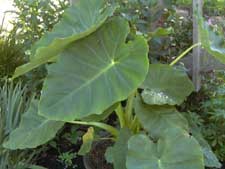
Elephant ear, Alocasia are a semi-tropical tuberous bulbs that are hardy in zone 8-11 and will die in freezing temepratures.
In a cooler climate, zone 7 or lower, there are several methods you can use to winterize your elephant ear plant.
Option 1:
When the foliage starts to die back (turn brown) reduce watering. If/when a frost blackens the foliage, cut the stem down to 6″, dig up the tuber and remove excess soil. Try not to bruise or cut the tuberous bulb as that can cause infection and rot during storage.
To “cure” the tubers, air dry, out of direct sunlight at 60F for three weeks or dry them in the sun for a couple of days and then remove the excess soil.
Once dry, store the cured bulb in peat moss, vermiculite or sawdust around 40-60 degrees in a dry, ventilated location such as a basement or cellar. During the winter, check the bulb for shrinkage and rot (discolored soft spots). If the bulbs appear shriveled, moisten the medium a bit. Replant next spring.
Store in container
You can also store the bulb as is in the pot in a heated garage. Insulate/wrap the container for added protection. After the leaves yellow and die back, cut off the dried foliage and add 2-3″ of mulch on top of the soil.
If you don’t have a heated garage, a cool, dark place such as a basement will work. Store between 40-60F and water lightly once or every 2 months to keep the soil from totally drying out.
Option 2:
Treat your elephant ear as a houseplant. Give it a southern exposure (high light), high humidity and water enough to keep the soil from drying out. If it continues to produce leaves, feed it with a 1/2 dose of liquid fertilizer, otherwise, just keep it moist. The plant may sulk indoors during the winter but when the weather warms up in spring bring the plant back outdoors slowly re-acclimating it to brighter light exposure.
From the reader archive
Useful reader questions
I am very confused as to when I need to dig up my elephant ears. I know it is suppose to be after the first frost but last year even after the first frost they stayed green so I left them a…
Read Pam discussionI live in Indiana so I realize that my elephant ears won’t be safe outside during the winter. I have read that you can bring them in as house plants for the winter but I am confused about the dormant stage that…
Read Kathy discussionWe live in Raleigh, NC. Three years ago we moved to a new house, and I brought some of my elephant ears bulbs from the old house to the new one. They were small, pitiful little bulbs, about the size of walnuts.…
Read Victoria discussionHi guys….Ok I live in Rock Hill Sc and I brought back some Giant Elephant Ears back from South Florida…I noticed they dont have bulbs…its like roots growing off the bottome of the elephant ear…they also produce and grow off a big…
Read Sandy discussion
I live in nc. i have a 3-4 ft tall elephant ear..some leaves are starting to turn brown, but then others are very green..what do i need to do before it starts to frost? do i need to cut the plant or let it die back?
Storing caladiums
I am somewhat new to this gardening thing. Can someone please tell me when is the best time to dig up my caladiums and how to store them? And…when to replant them? Thanks.
I live in North Alabama and we are expecting our first frost within the next two weeks. I have one elephant ear plant with about 12 leaves each about 4 – 6 ft long. I dont plan on digging up the bulb, my question is, what is the best method to protect the bulb over the winter while it is still in the ground?
Thanks Barry
I LIVE IN PENNA. LAST YEAR I PURCHASED 2 BULBS. I DUG THEM UP TOWARD THE END OF THE SEASON AND REPLANTED THEM THIS YEAR. LAST YEAR THE BULBS LOOKED THE SAME AS WHEN I BOUGHT THEM. THIS YEAR, THE LEAVES WERE SO BIG AND BEAUTIFUL.WHEN I DUG THEM UP,
I HAD A FEW TUBULAR GROWTHS, AND THE BULBS WERE AT THE END OF THE STALK. I HAD A WHOLE LOT OF ROOTS.
MY QUESTION IS: WILL THE BULBS AT THE END OF THE STALKS GROW NEXT YEAR?
Good morning. I have a 19′ by 18′ solarium. I planted my first Elephant Ear Plant in a container and it seems to be doing well. I notice on the back of all the leaves are these tiny olive color objects about the size of a pen point. They don’t move and when you touch them they smear. Ants seem to be attracted to them. What are they and can I lighty spray the back with an insecticide.
Thanks
Scale
I dug up and brought in my elephant ear bulb before the first frost. I planted the bulbs in large planters indoors and they began to grow indoors all winter long. However, I began to notice small specks all over the leaves that did not appear to move. I then noticed that my rug became very hard and sticky in spots. These specks also spread to some of my house plants that were in the same room as the elephant ears. Were these aphids and have you ever heard of this happening before? I’ve since replanted my elephants outdoors and they’re doing great. But how do I get rid of these sticky pests on my houseplants? I would greatly appreciate any suggestions. Thanks!
Elephant ear bloom
I have several Elephant Ears in pots, they are second year bulbs. One of them has a yellow flower it is a long yellow flower not opened yet, is this normal?
I live in Atlanta Ga and we have already had our first frost. The leaves on my Elephant Ears (planted outdoors) are now brown. My question is: Do I cut the leaves and stalks down to the ground? I’ve read in several different places that the bulbs don’t have to be dug up in the region that I live in??
Any advice would be appreciated!!!
Tom
From bulb to tuber
This past spring, I planted an elephant ear bulb and enjoyed a summer of hugh and beautiful leaves in a space about 2-3 feet square (from one bulb). I have just dug into this grouping after one night of about 32 degreee temps and have not found any bulbs – just thick stems with many curly white roots about 6 inches long coming out of the stems. What happened to my bulb and what should I do with the white stem and roots now?? I have presently stored them in my basement covered with soil and dry leaves. Help!!
I have 6 beautiful elephant ears around my pool in australia and we get 40+ deg Celsius here in summer.
My plants are well watered and fed they are also protected from full sun getting 90% heat and 25% UV. They have flowered well (about 4 per pot) I would like to know what to do with the flowers? Should I trim the stalks back or leave them to wilt as they are healthy stems and look like the plant is using a lot of energy to keep them solid and upright.
I just checked on my winterized elephant ear bulbs and tubers. The tubers are in good shape but the top of the bulb, not the bulb itself where the roots come out, is shriveled. Should I do something to fix it? How do I tell if the bulbs are viable? Thanks!
Hi, after reading some of the comments on the Elephant Ear plant, I wouild like to add. We live in Southern New Jersey and while this was our first time caring for this plant in the winter and having no knowledge other than knowing it would not take our winters, we brought it in and replanted in a larger container. It has doubled in size, kept mainly dry and not sure what part of our room, southerly, northerly, whatever side the plant is on but seriously, it is gigantic. We had given it general plant food along with the other plants we had to bring in maybe once or twice this winter but no special treatment. Now, we have to get another larger planter for the base. Sometimes a little too much care and fuss really doesn’t matter.
You’re absolutely right! Thanks for the comment.
THX 4 the info. I have 2 more questions……..my nursery still has some giant bulbs 4 sale. Is it too late to plant these this year? I am having a blast w/ the 4 giants I have already springing up around my house for the 1st time. Also…….how do I mulch my bulbs for winterizing? This is the best site. I have 600 caladium bulbs rounding out my back yard.
Hi,
I have two bulbs that I planted this summer and my leaves are very big. I live in Wisconsin and the winters here can be very cold and harsh. Can I cover these plants somehow to protect them over the winter? Will they come back next year?
Thank you in advance for your advice.
Angi
I HAVE A BEAUTIFUL PLANT ON BOTH SIDES OF MY POND, WHEN DIGGING IT UP IF I DONT GET ALL OF THE ROOT WILL IT HURT IT? I WAS TOLD IN PA ALL YOU HAVE TO DO IS CUT IT DOWN LEAVE IT WHERE IT IS AND COVER IT WITH MULCH. IS THIS TRUE, OR WILL I HAVE TO DIG IT UP?
Hello, i live in Michigan and i was wondering if i can keep my Caladiums in their pot and bring them indoors as a house plant instead of digging them up for the winter.
my elephant ears produced a flower . It looks like there is a bulb inside the flower , if it is a bulb can it be taken out and planted? If so what will it produce?
Hi Charlotte
It sounds like a seed pod.
I live in Central Florida and have never winterized in three years of growth but most of my elephant ears have died down and I find a good deal of rotten bulbs in the large beds. Is this from a lack of seperating or perhaps too much water. The bulbs range from golf ball size to much larger than softballs and they are squeezing each other up and out. I fear I may need to winterize but not necessarily for frost reasons.
Plant seeds
I have a plant that had a seed pod. I took the seeds and placed them around the base of my elephant ear plant and a dozen seeds sprouted. I transplanted them into pots and then again into the ground. I have new seed pods and am wondering can I germinate from the dried seeds of the pod (no plant)…is there a prefered method? Is the seed pod a flower? Mine are red and I live in southern Florida, thanks!
I live in North Alabama and we don’t do anything to ours.In fact we run the lawnmower over it the last time we cut the grass for the year. We have been growing it for about 15 years now.
Moje Uszy sÅ‚onia zakwitÅ‚y – hurra!!!!
Congratulations!
Why does the elephant ear info say hardy to zone 8, yet everything i read says to bring it indoors in the winter in zone 8? It is either cold hardy or it isn’t. I live in zone 8 in the Seattle area. It freezes in zone 8. I don’t understand why online nurseries are pushing the alocasia gigantea and calodora as cold hardy if they are not. Something that dies in the winter and “might” grow back is not cold hardy. Mediterean and windmill palms are cold hardy. They don’t die!!!
Mold on bulb
my elephant ear that I stored over the winter (zone 5) seems soft in spots and has a little bit of mold on it. Will this work itself out when I plant it for spring or if it has started to get soft is it no longer any good.
Thanks
I, too, like Sharon above, just unwrapped my giant elephant ears and have figure eight looking bulbs. I split them, and planted them in simi-shade here in my garden in Kansas. Also, pulled off a couple of tubers and planted them seperately. Hope I didn’t goof. We’ve enjoyed these giants for several years, and everyone comments on their size. Love having this little piece of the tropics in Ks. Thanks for your response.
i have an elephant ear (up right) that i move from one spot to another same location but about five feet from where it was planted at first,now one of the leaves are turning yellow.can someone tell what could be causing this.did i shock the plant by moving it.
Can you tell me for sure if elephant ears cn be split to produce more plants? I have been researching this and cannot seem to find a definite answer. My sister is wanting a start from mine and I don’t want to kill my plant when (or if) I try to get her one. If this is possible, can you please tell me the proper way to do it? Thank you in advance for any help you can provide!
Renee
Storing bulbs
CAN SOMEONE TELL ME HOW TO STORE MY ELEPHANT EAR BULBS. I ORDER THEM ABOUT A WEEK AGO AND THEY CAME IN THE MAIL TODAY.THEY WERE WRAP IN NEWSPAPER AND THEY ARE THE SIZE OF A SOFTBALL. I DON’T WANT TO PLANT THEM THIS YEAR,SO WHAT IS THE BEST WAY TO STORE THEM OVER THE WINTER.
I live in Indiana so I realize that my elephant ears won’t be safe outside during the winter. I have read that you can bring them in as house plants for the winter but I am confused about the dormant stage that I understand that they need to go through. So I am to understand if I plant them in a container as a house plant are they going to go dormant or how does that work? Do I continue to water? Please explain the steps I need to take to care for it as a house plant. I want to continue to plant it again in the spring outdoors. What kind of cycle am I to do. Thanks so much.
Winter dormancy
okay, I might be confused about what it means to go dormant. I am going to try to bring my elephant ears in throughout the winter this year instead of digging them up and drying the bulbs. If I do this, what will my elephant ear look like, will it still continue to have leaves or will they all die out? Dormant just means that they will not grow through a growing stage right? Thanks for your help.
Winterize Elephant ear
I live in NYC in a small apartment, I grow my elephant ears in large pots at my camping resort in upstate New York. Here’s the problem, the campground closes in early October and I think the plants might still be going strong by then. Can I just cut the still vibrant stems back and proceed with the normal storage methods and bring them back home? There’s no room for these giants in my apartment.
I LIVE IN LOUISVILLE,KY THE WEATHER HAS BEEN PRETTY GOOD. 80’S. THE LAST COUPLE OF DAYS MY EARS,CANNAS AND CASTOR BEAN PLANTS ALL HAVE FALLEN TO THE GROUND.I DON’T KNOW WHAT’S WRONG.NOT OVER WATERING.THEY JUST WON’T STAND UP ANYMORE.
i chopped down my plants today and dug up the bulbs and washed them off.gonna let them dry out and store them for the winter,is there anything special i need to do.and by the way i found out what happen to my plants,the maintenance crew that cuts our grass sprayed them with some kind of chemical which cause them to lose the ability to stand up.will this chemical kill the bulbs.they said they will give me a gift card to pay for my plants.
more bad news,my bananas are starting to fall and the shoots are breaking off one by one.that was some strong stuff.
they said it must have been from the chemical drift.some of the plants are still producing leafs,and one of them looks like it was about to flower.didn’t know that ears would produce a flower.if they continue to produce leaves then maybe the bulbs are still good.i talked to the guy and he said the chemical on kills what come in contact with.he also said the name of stuff they sprayed was called premium 3 way herbicide.
Hi guys….Ok I live in Rock Hill Sc and I brought back some Giant Elephant Ears back from South Florida…I noticed they dont have bulbs…its like roots growing off the bottome of the elephant ear…they also produce and grow off a big root connected to the bigger one…now I know they probably wont survive here during our winters so I took the babies and planted them in pots and also dug one of the Big ones up…it stands about 5 ft or more…i also planted it in a huge pot..My questions is will it grow indoors under grow lights and a regular humidifer…if not how am i supposed to pull them up and winterize them without a bulb??
Bruise/cuts
i have elephant ear bulb the size of a softball and i was letting in sit out to dry,and i notice today that it has soft spots and where the shovel hit it when i was digging it up looks like it’s starting to have mold on it.is there anyway to save this bulb are should i just get rid of it and count it as a loss.
Dividing offsets
i have dug up my ears kinda confused cause it has several new babies do i break the babies off and it now becomes it own bulbs ? when do i cut the roots off ?
Store elephant ear
Can I store my elephant ear bulbs in a shed that is outside in the yard?
what about it being soft.how does that effect the bulb.will a soft bulb still produce. i am running out of time.
my elepahnt ears have had a frost on them and the leaves have turned brown. I cut them off but still have a few new leaves coming out. Would it be okay to cut them all off to about 6 inches then dig them up to winterize?
I live in Long Island NY. Is it possible to leave the elephant ears bulbs in the ground , cover them with mulch and let them overwinter in the ground? If yes then how should I prepare them, ie water, cut back stems, etc?
Thanks for you help
We live in Raleigh, NC. Three years ago we moved to a new house, and I brought some of my elephant ears bulbs from the old house to the new one. They were small, pitiful little bulbs, about the size of walnuts. I figured what the heck, and I planted them in a long bed on the east side of the new house. The first year, I was amazed to see them all come up and produce a lovely stand of 4+ feet high leaves. I had never dug them up over the winters at the old house, so I just left them in the ground at the new house. This year I have an even larger stand of 6+ feet leaves with enormous bulbs (?) bulging out of the ground. A few of the plants have flowered. I didn’t mulch last winter, although the large bulbous parts of the plants were above ground. I just cut back the leaves after the frost hit them. Can I continue leaving them in the ground, or are they becoming more vulnerable as they push themselves upward? Any suggestions?
I have moved all of my elephant ears inside for the winter. I live in Lexington KY now. The plant bloomed indoors surprisingly to me as I have never seen a bloom on one. Now I fear aphids have found my plants. Can I wipe the plant down or spray the plants with a dawn and water solution as I do my roses? or will the soap harm the elephant ears? and also how is it that these plants had no aphids all summer and I go to thanksgiving come home to find them. I have no other plants in the house, just these elephant ears. Oh well I guess as long as I can get rid of them.
Dividing elephant ear bulbs
i was wondering i bought back in the spring 3 bulbs this is the first time i have ever planted the ears for my self and i was wondering when can the bulbs be split to get more plants out of a bulb? thanks john
I have several LARGE (5′ high with 4-5′ leaves) in their first year in my Koi pond bog filter. They have been hit hard by the frost, but the water never freezes. Is it safe to leave them in the water? I took them in last winter and replanted in the spring and was blessed with these huge plants. I don’t want to lose them, but the Cala lillies and such that are in the water always come back so I wondered if the Ears would be okay too? Thanks
(Great website!!)
Water drops from leaves
I have some type of Alocasia that I got as a very small plant. It is about three years old now and doing quite well. I have not seen any identical images on the web of my plant. I live in Michigan and keep the plant in a rather large pot. It has had one offshoot that seems to have formed from the root/tuber. It seperated and has turned into another nice plant. Each year I bring it in for the winter and consistently for the last two years it has bloomed in December. Last year one bloom and this year two blooms. The other unusual thing the plant does is it drips water constantly from all of the leave ends. I have not seen that noted on any of the posts. Can I attach a picture somehow to see if it can be identified more properly. Leave stems are about 2 – 3 feet and the leaves are about 1 foot long. Green leaves with no purple signs. Leaves are very fleshy and the stalks are very thick and moist.
To winter over or not
i lived in southern part of ill. i bought 2 elepants plants last year from wal-mart. i even asked them if i had to dig them up. they said i didn’t have to. so i just went aout there and they were rotted. to my question is can leave out there and cover them up this year or should i have to dig up this year in fall
I live in Maryland and wanted to try elephant ears this year in the garden. I bought some from Walmart yesterday; When should I plant them? Also, the instructions say I can plant them in full to partial shade. I plan to plant them in the front yard that faces west and gets about 8-9 hours of sun. Will planting the ears here be okay?
I would move them outside when temps stay consistantly above about 45 or 50. I have learned that they strive on lots of sun and lots of water. The west side will be perfect. They are technically a tropical plant so again, lots of sun and consistant watering. Mine get a regular watering with my irrigation system 4 days a week and grow to 6 or 8 feet every year. I’ve never taken them up for the winter but this is northern Mississippi, not Maryland.
Planting temperature
I live in the Seattle area when do I plant my Elephant Ear I bought from Wally? Can I plant it now when the soil is still cold and the temp is 45deg. at night?
Hardiness in Pa
I LIVE IN PA.AND I LEFT MY BULBS IN OVER WINTER AND THEY CAME UP THE FOLLOWING YEAR WITHOUT ANY MULCH. GUESS I JUST GOT LUCKY. THE NEXT WINTER THEY DID NOT MAKE IT THROUGH. THIS WINTER I LEFT THEM IN AND PUT A NICE LAYER OF STRAW AND A PILE OF LEAVES ON TOP TO SEE IF THEY WOULD MAKE IT. I WILL FIND OUT SOON.
When to plant outdoors
i live in louisville,ky zone 6 i think,when can i plant elephant ear bulbs in ground.
I LIVE IN CENTRAL FLORIDA. LAST YEAR I COLLECTED NUMEROUS SPECIES OF ALOCASIA. WE HAD A COLD WET WINTER. I LEFT THE BULBS OUTSIDE IN THERE POTS WERE SEVERAL SPECIES DID WELL, BUT OTHERS WENT DORMANT. IT HAS WARMED UP NOW BUT THE DORMANT PLANTS DID NOT START TO GROW. I LIFTED THE BULBS WHICH HAD DEFINATE SIGNS OF ROT AND I NOTICED SMALL UNDERGROUND TRANSLUCENT INCH WORM INSECT ON THE ROOTS. SO I DRIED THE BULBS CUT AWAY THE ROT AND TRIED TO GET THEM TO ROOT WITHOUT SUCCESS. ANY SUGGESTIONS? SHOULD I JUST TOSS THEM?
I have had a large elephant ear for the past three years in south Louisiana. It weathered the first two winters and came back strong each time. This past winter we had three nights of freezing temps. I cut the leaves back. THen I noticed the top part (that spews the leaves) got mushy, but the bottom part was firm. I cut it. I noticed a month later that the top of the stalk was mushy, so I cut it back further. Today (4-23-10) I noticed that that top 6 inches (out of a foot of stalk) is now mushy. I was going to cut it, but thought I’d ask. Is the plant dead? Can I expect it to come back or is it rotten? Is there anyting I can do to save it (i.e. cut it to the ground and wait?
My question is I have an elephant ear plant that i bought from a nursery. it was doing well for a while but then it grew a flower like stem and after that a few of the leaves turned yellow. i cut off one that looked real bad but now the flower turned dark brown and another leaf is dying. i transplanted it thinking that maybe it just outgrew it’s pot but i don’t know what to do any ideas???
Which way to plant
hi…I live in Northern New Jersey. This is my first time planting EE’s. I have no idea that they were to be planted with point to sky. My question is: Do I need to dig up and see if they are planted correctly or will they break through soil anyway????thank you for any info you can give me. We have always wanted EE’s so will be disappointed if we fail at this attempt.
Divide elephant ear
Montreal, Canada. I have a really nice elephant ear in a pot. It’s been doing really nice for the past 3 years. Inside during th winter, it flowers 8-9 times during that period. It’s outdoor now for the spring-summer season but it is getting really big (3 feet tall and 3-4 major stem). I would like to repot in a bigger pot or divide it in two pots but I am afraid It won’t survive the transplant. Any advice? Also, if I decide to let it go dormant next winter, will I lose the height of my plant ? Thnaks so much for the great answers on this site.
HELLO, WELL I HAVE A VERY BIG ELEPHANT EAR PLANT, BUT SEE IT’S BEEN OUTSIDE AND WENT THROUGHT THE SEASON’S , NOW IT’S TOO BIG TO BRING IN AND OUT AND IT’S ALSO NOT IN A POT BUT THE GROUND, NOW HOW DO I KEEP THE LEAVE’S FROM DYEING, NOW THIS WINTER THE POOR PLANT HAD PROBLEM, BUT I REALY DON’T WANT THAT TO HAPPEN AGAIN, SO HOW CAN I FIX THIS NEXT YEAR???
AS I STATED IN A EARLIER STATEMENT I LIVE IN PA. AND LEFT THE BULBS IN OVER WINTER I PUT A THICK LAYER OF STRAW OVER THEM. I DUG THEM UP ABOUT 2 MONTHS AGO AND THE BULB HAD TURNED TO MUSH. BUT THERE WAS SOME BUDS (I GUESS THATS WHAT YOU CALL THEM) THAT WERE OKAY. I TOOK THEM AND REPLANTED AND THEY ARE GROWING.
i have 3 different size elephant ear bulbs baseball size,softball size and football size and the smallest bulbs are producing the largest leafs why is that?can anybody shine some light on this situation please.
Variation in leaf size
Hello I had a little of that promblem once too, but what iI did I put the big one in organic soil & the second to the big was put in miraclo gro soil, and that little one in just pain dirt, and water like normal, I’m here to tell you right now I can’t tell you which one was the littlest, they was growing like neck to neck and then all of a sudden they wow they all r the same size, but i can tell u this too i dont know ur state, but here them elephat ears are like all along my back yard fence..
Store elephant ear bulbs
Hi, this is my first year planting an elephant ear, it gigantic and gorgeous, and I want to replant it in the spring. I live on the line between zones 6 and 7 so I will be digging it up in the fall. My dilemma is where to store the bulb for the winter. I have a detached garage and I am afraid it will get too cold out there. We have a wood stove we use to heat the basement so it will be too warm down there! I thought maybe the refrigerator would be good but a friend told me there’s too much moisture in there. I also thought maybe an insulated box/cooler of some sort would be good in the garage but from what I’m reading that may not be enough air circulation. Any advice??
all along my flower bed all the plants elephant ears, cannas, lantana, crp myrtle trees the leaves and stems are curling and look sick. what could be causing the problem and what is the best treatment. like many others i am new to gardening and it is discouraging to watch all your hard work slowly die.
Watering plants
i have a problem this year,everything i have planted this year that i didn’t mulch over the roots are growing out of the soil.i planted them deep enough so i know that’s not the problem,can anyone shine some light on this.
We have just sold our house and are preparing to move in about two weeks. We have a large stand of elephant ears growing in the front yard and would like to dig them up and take them with us. However, we live in Oklahoma and the temperatures have been in the 100’s for the last week. Is it safe to dig up the bulbs in these extreme temperatures? If we dig up the bulbs, should we plant them in pots? Or should we dry them out and store them in the basement of our new house? HELP!
We live in South Carolina. Weather is 100 + and dry this year. My mom has them all over her yard, looks like a zoo,they keep multiplying and they look beautiful. I water them once a day. My concern is bugs or fungus. All the other plants look sick as well. i see these rolly polly things in the ground and we have tons of ants. I have used sevens dust but that did not help.
From bulb to tubers
Last summer I got my elephant ears ‘Black Magic’ and ‘Elaina’ out of their pots, intending to store the bulbs as directed (like my dahlias) but there was no bulb in either of them. The Black Magics and the Elaina had only a mass of roots, no tuber. (Since I have 2 Elaina’s, the other one was brought inside and did well as a house plant. This year she is gigantic, much larger than last summer.) Anyway, I want to have Black Magics again but not being able to store them is an issue.
Hi, I had a wonderful elephant ear season here just south of Hannibal Missouri….They are huge and healthy and I have been fortunate enough to get flowers…What do we do with the flowers? They are just now coming on and they are beautiful. I’m sure I will be digging the entire plants up here within a couple of weeks for the winter but do the flowers produce anything that I can use to make more flowers?
How do the companies that supply the ‘Big Box’ stores dry their Elephant Ear bulbs to look like they do. When I dig mine up and knock off the dirt and let them dry a couple days, they don’t even hardly resemble a bulb. I don’t know how close to cut the stalk down to the bulb and should I remove all the roots coming out of the bottom of them? I’ve had 10 years of success digging up my ears and having them come back to life until this spring. When I got ready to plant them, every one of them were rotten! I just about cried. I replaced them this spring and now it’s time to dig ’em up again. I always hate to cut them down when they seem to be at their most beautiful growing state, but I know it must be done…..
I live in Gore, Ok. 44 miles west of Ft.Smith Ark. What zone am I in, and do I need to dig up my elephant ears?
I live in Columbia, SC and have several elephant ears that have overwintered in the ground for the past 3 years. They come up every year and even produce flowers!
If i dig them up and overwinter them under the crawlspace and replant them in the spring, will they produce bigger plants than if I would have left them in the ground throughout the winter?
Thanks.
I live in Nortwest Missouri and I received the Elephant Ear Plant from my son’s funeral about 10 months ago. I’ve kept it in the house where it continues to thrive. However, I don’t want to keep this plant in my house forever.
My question is how can I maintain this plant outside even through the Winter without having to dig it up every year?
I left mine out last year, which turned out to be one of the most severe winters in the history of Oklahoma…..lots of snow, ice and freezing temperatures. I think the only thing that saved my elephant ears was the 20″ of compost and leaf mulch that we piled on top of them in early November. They were also planted next to the house where it may have been a bit warmer. Not only did the Elephant Ears survive the brutal winter weather (I lost not a single one), they grew to gigantic size…some of them nearly 6 feet in height with leaves nearly 3 feet across.
i live right across the river in nky. although i do not have potted elephant ear plants, i do have tubers that i plant my in my flowerbed, which is in direct sunlight, every mid-May and they are very proficient throughout the summer until i notice browning and dig them up right around halloween storing them in my garage until the next spring. they produce many smaller tubers that i remove and replant as well. they are very exotic to this area and i receive many compliments from my neighbors.
Nice. Thanks for the comment!
I’m sorry for the loss of your son. I live in Southwest Missouri (Zone 6a) and never dig up my bulbs over the winter. Instead, I just mulch heavily with the cut brown leaves of the plant, cut stalks of cannas, and a few bales of hay. They always come back here for me. I dug my bulbs for the first time this year and they rotted over the winter. Good luck! I hope they do well and you are able to enjoy them as much as I have enjoyed mine.
I left my plant in the ground this past winter, spring came an it is very mushy on top, is this plant still alive? I have 3 elephant ear bulbs.
Katy…I’m having the same problem, and I truly feel horrible. I have been planting these bulbs for about 3 years now. At the end of each season I would dig up the bulb, and store them in the attic, and never had a problem. But this year was different. I took down the bulbs and when I looked into the box…ALL the bulbs that were bigger then a softball had mold/rot at the top and were complete mush 1/2 inch down from the top….I’m soooo upset. I cut off the mold/mush but now the bulb has a open cut into it…and I dont know what to do.
Can someone please let me know if I should put something on the open cut of the bulb…I’m in zone 6b and not ready to plant yet…so what can I do to try and keep these rots alive…or is it too late and I should have a funeral?
Thanks in advance,
Jo
Leaf transpiration
I have just started growing elephant ears. My bulb finally has one leaf on it. Today I noticed on the leaf for some reason there is water that gathers on it why is this? I dry it off and it still comes back. I know it’s from where I water it. Please reply I am very curious about this plant.
What about wintering in a greenhouse?? would it be treated similar to the houseplant process?? First time owner of an elephant ear mojito. thanks
I am very confused as to when I need to dig up my elephant ears. I know it is suppose to be after the first frost but last year even after the first frost they stayed green so I left them a little longer till the leaves turned brown and they were bad when I went to replant them this spring. So I got some more and now should I go ahead and pull them after the first frost even if they are still green and cut the leaves off to the root or how should I do this? I want to make sure I do this right this time and any care tips you can give me would be great. I live by Springfield, MO. Thanks
Flower?
I live in Nebraska and have had great success with my Elephant Ear. My question is this summer we have had so much rain I’m wondering if it’s growing right. At the bottom of the plant it has the big leaves but in the middle it has sprouted a thick stulk and branching off in several small weedy looking leaves now about 3feet taller then the big leaves. I’ve tried looking at pictures of elephant ears but all the leaves seem to remain large. Would it hurt to cut this weedy looking part off my plant or is this part of how the flowering part of this plant looks like?
I just found your site. I have started growing tropicals again such as elephant ears and cannas, etc. I live in Iowa(zone 5). I keep reading comments that you should put them in peat moss after they dry out for the winter. Does this mean completely “cover” them in peat moss, or lay them on a bed of peat moss, or sprinkle with peat moss??? Long ago I had some cannas that I completley covered and the peat moss dried up all the bulbs.
Thanks
Thank you for your help. The first year Itried this with the peat moss, I covered them and the peat moss completely dried out the tubers. I have never done it since then.
Hi! I like Jim, have just found your site, and so far, I love it!
I purchased an elephant ear plant back in June which was already very large and had many babies growing near the base. For the past week, my elephant ear has been sending up it’s beautiful flowers and I couldn’t be happier! I have flower after flower, and I did not know they flowered until I saw mine, so I have a few questions.
I understand that in the plant’s native land, a beetle comes to pollinate the flowers, but I live outside of Chicago IL, so I don’t have these beetles to do the work for me! Is it worth pollinating the plant myself, and if so, how would I go about doing that? Also, if I hand-pollinate the flowers, what do I do afterwards with a potential seed pod?
One more… I haven’t cut the “dead” flower stalks off the plant, because I’m not sure if that would help or hurt it. Do I need to “dead head” this plant?
I have three large plants of this, one of them is over 12 years old. I’ve always done the house plant method of winterizing, in giant rubbermaid tubs as pots. Now I’m out of room in the house, as they would take up 1/2 a room. So for the first time, I’m gonna try the cut off the leaves and store in the basement method. I’m concerned with spiders using them for a home and cats using them for litterboxes. Can they be totally wrapped up and covered? Do they need air flow?
Smaller alocasia
I bought very large alocasia bulbs a few years ago they grew into plants over five feet tall. I left them in the ground covered with about six to seven inches of leaves I raked for the winter in Fort Worth, Tx. They grew back half the size. They had grown to over five feet with very large leaves like I saw in pictures online. Now they grow back smaller every year. What if anything can I do to get them large again?
Hi this is Bruce,I live in upstate NY,this is my first year trying to save my EE,my question is,do I cut off the tons of little tentacles? (they remind me of Pirates In The Caribbean),before I store them in the peat moss at 40 to 50 degrees.thanks
Winter hardy in St. Louis, MO.
I JUST FOUND YOUR SITE ALSO. WE LIVE ABOUT 60 MILES WEST OF ST LOUIS MO. DON’T REMEMBER OUR ZONE. THIS IS THE FIRST YEAR FOR THESE PLANTS AND WE LOVE THEM. WE HAVE 2. WILL GET MORE IN THE SPRING SINCE THESE DID SO WELL. MY QUESTION IS, FOR THE WINTER, DO WE HAVE TO DIG THEM UP OR CAN WE CUT THEM OFF 6 INCHES ABOVE GROUND AND COVER THEM HEAVY AMOUNT OF WITH WOOD CHIPS?
Winterover
I have a elephant ear plant that I just got I live in Ashland ky wanting to see of I would have to dig it up for the winter thanks for your help
Question…I just bought 2 bulbs for my daughter who goes to school in Arizona (we live in Ohio). She will be home for the summer. Can I store the bulbs in the refrigerator so she can take them with her when she returns to school in August?
Which way do you plant bulb pointed end up or down
Hello!
I bought an elephant ear “bulb” and put it in a large pot. It did well for a couple of months, and I kept it wet as I was told not to let it dry out. Now the leaves are turning a straw-color around the edges, and the green part is not vibrant any more. ‘Not sure what I have done, if it didn’t really like it in the pot, or I kept it too wet, or the 100 degree weather here in OK has burned it. So my question is, can I salvage this? Like, take it out of the pot, cut off the stems, let it dry out, and plant it in the garden? (We have really mild winters lately.) Thanks for your help, you always give great advice. Lorna
Hi Debrah
I live in Austin Tx. and started planting elephant ear bulbs 3 years ago and have seen the same in my plants, they grew very nice only the fisrt year.
Now in 2012 I tried taking the bulb out of the ground and planting them in pots that way I renew the soil, and keep them moist and fertilized much easier, (weird) I buried the pots almost to ground level in flowerbeds and I have my 4-5 ft. Plants back with 2.5 ft. Leaves.
I have some other types with total 7 ft. Tall and 4 ft. Leaves, I would call them “giant”.
For me the trick’ is “pot them” and get them back. It’s much more work but it’s worth the effort.
Hi , I live in Tennessee. My elephant ears are about 8 ft tall , some ears are wilting but most are still pretty green. Is it safe for me to cut them back now? iv been mulching them to keep them from freezing in the winter.
We live in California. My dad planted an elephant ear about 30 years ago. We have never dug up the bulb as it never seems to get cold enough. I also did not know you were suppose to do that. Our elephant ear has become enormous, and has tentacle like roots all around it. My question is, can I cut these long tentacls off with out damaging the plant? They are all over the ground and have wrapped themselves around the plant. I have cut back the leaves for years and it has never damaged the plant. Thank for your help
Winter storage
Winter snows this fall in CT, and I wanted to save my elephant ears for next year. Removing and drying them out was not an option (the plants were enormous and bringing them in wasn’t an option either). So I cut the green leaf stems back to about 12″ and brought the pot into the basement. Upon some advice I’d read, and previous positive experience with other bulbs/tubers, I left them in their pots and put them in the basement to overwinter. It is a cool, dry basement, but not perfectly dark – there are several windows to the outside. I checked the plant today (december 3) and see that the remaining stems are oozing quite a bit of liquid, and do not appear to have died down at all. Is this OK, or does it mean that some kind of rot will set in? Should I do what I was dreading and remove the plant from the pot and try to dry it out? Should I put it outside for one night and hope that the one cold evening will kill off the stems? Thanks so much for your help. This plant was such a show-stopper last year that I’d hate to lose it.
I live in Charlotte nc and I just bought a house and outside is an elephant ear plant and it has wilted and i want to save it because its getting cold out.never had this kind of plant before so not sure what to do
I live in upstate NY, I have a plant outside that did really well this summer, and now I am ready to bring it in for the winters, my problem is I live in a trailer and we heat with a pellet stove, so it is always around 80 degrees in there. I want to make my plant go dormat for the winter what can I do? I have a small half bath that is farthest from the stove that is kind cooler, what can I do?
Ok so my elephant ear plants has grown to about 5ft. I live in Texas and during the winter it survived. I personally thought it was dead but now that it is warmer it’s procucing new leaves. The base is all brown… Is it safe to peel off ?!
Hardy in Texas
I live in Texas and I planted my first Elephant Ear last year, I did not pull them up I was going to go buy some more, but one morning I was going to my truck and I looked at the flowerbed I seen them trying to come up can they regrow them self’s .
can i divide my ee plant with the leaves on it ? its the start of summer .I like to save the leaves if possiblet on
Thank you for all the advice, especially learning that they may be brought indoors. I am in the Chicago area and this year I had three giant elephant ears that I must have planted the year before. I never saw much of them then, but this summer – wow. They had to have stayed in the ground. I did not plant them this spring! We had a brutal winter, so I am wondering if the 40 inches or so of snow cover protected them. I am truly amazed. That’s not all. Just6 or 7 feet away is a young plant that started with no flowers ever. We also had one if the wettest springs and summer in memory.
hello. Every year i dig up my elephant ears but never see a bulb as when i planted them. I hear of everyone digging up their bulbs but all i ever get is roots. What happens to the bulb.? So i end up buying and planting new ones. ?? Any suggestions.? Please email if u can
Wi. Zone 4 Elephant ears & Taro’s stored in basement in shaving . Have done this for 2nd year now. I only have 1 question. Due to the unusual springs we get here in Wi. I am restarted my combes &/or Tubers in fresh potting soils. in the house in various areas to see where they do best. My ? is can I start putting them outside if the DAYTIME temps are above 50 But EVENING temps vary from 35 – 40 or greater? Some I grow in ponds is it to soon to start getting them wet once rooted ?
Hi!
I have a potted elephant ear that I will bring inside for our cold MN winters. I made a mistake and didn’t watch the forecast close enough and one morning came out to froze leaves on my elephant ear. Of course now it is indoors and I am wondering what the best thing to do at this point is. Should I cut back the frozen leaves?
Me too! I google images and see these huge elephant ears bulbs. All I see is roots. I overwinter in my cellar just took them out and the tops where all mush. I cut back, planted in pots and have them in my sunny window hoping for the best. This is my third year with my elephant ears. If they don’t make it I’m done!
I bought a home that has elephant ears in the backyard and there are four areas where they grow from. There are tons of bulbous tubers above ground at this point all of which have no soil around them summer about halfway in the ground and most are mushy and white at the top. I cut the Dead leafy pointed tops off of them exposing a white spongy interior. Last year I I saw a lot of growth out of these bulbs above ground but I am curious as to whether I should cover them with soil and whether cutting the tops off the tubers exposing the white spongy area is a mistake.
I did not dig up my elephant ears last year but they all came up this year will they come back next year if I don’t dig them up??
Also my neighbor said he would like to have some seedlings are babies from them how do I get that do I just dig them up and do they have seedlings on the sides ???
Last fall I got really busy and never dug up my elephant ears from the pots and stored them in my garage in Buffalo NY for the winter. The garage is not heated but is definitely warmer than the outside. While I am thinking that I killed the elephant ears, I am going to try to see if they come back in the pot. The question is – should I just bring the pot into the house in a sunny location to jump start the growing and water? Do I dig up the bulb and replant? Just not sure what to do to start up the growing process again. Thanks for the help!
This will be the second year that I will bring my plant indoors. So is it OK for me to grow it like a house plant two years in a roll. And is it OK to dig up the babies and plant them will they make it?