Plant Care & Gardening Tips@ HortChat.com©


Endless Summer Hydrangea

Filed under: — admin @ 4:45 pm


‘Endless Summer ‘ Hydrangea is part of a small group of Hydrangea macrophylla that is known to be dependable for winter hardiness and repeat blooming. It was discovered in St. Paul, Minnesotta, by Vern Black an employee of Bailey Nursery. After several years of trial testing, it was confirmed that wintered plants that died back to the ground still set buds and produced flowers the same season; proving that it bloomed on new as well as old wood. This is an unusual characteristic for H. macrophylla because it blooms only on old wood. This new plant was referred to as remontant or everblooming hydrangea because it had the ability to form flower buds in the tips of new growth, allowing repeat flowering throughout the growing season.
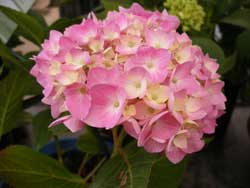
Endless Summer hydrangea

‘Endless Summer’ Bailmer grows to 3-5 feet high and wide and the color depends on the soil ph .
Since its introduction, similar cultivars of remontant Hydrangeas were discovered such as: ‘Penny Mac’, ‘All Summer Beauty’, ‘Blushing Bride’. ‘Dooley’, ‘David Ramsey’, ‘Decatur Blue’, ‘Mini Penny’, and ‘Oak Hill’. New and improved cultivars are constantly being tested and evaluated. Look for more varieties in the future.

Planting hydrangea

-Choose a location with morning sun and afternoon shade.
-Plant in moist, well-drained soil. Amend poor soils with organic material.
-Dig a hole 2x the size of the rootball, mix in compost/peat moss. Before planting check the roots are they white and healthy? Gently loosen the roots before placing in the ground and plant at the same soil level as grown in the container. Backfill the soil and be sure not to compact the soil. Water the plant which will fill in any loose soil and add 2 inches of mulch over the plants.
-Don’t plant under a tree as there will be competition for light and moisture.

Hydrangea care info

Tell a Friend or Foe about this 'Endless Summer Hydrangea article'

Bookmark this thread on Endless Summer Hydrangea

previous post: Rosemary care
next post: Florist Hydrangea


27 Comments on Endless Summer Hydrangea»

  1. I have two Endless Summer hydrangas and live in Vermont, how do you suggest preparing them for the cold winter months?

    Endless summer hydrangea is hardy to zone 4. It blooms on old and new wood so if you have a winter dieback, and you have to prune the plant close to the ground, it will still bloom on the new growth next season. To protect it in the winter you can mulch it with pine bark, leaves. One elaborate way is to trim the blooms and foliage and tie the stalks together and then slip a plastic collar (made from a nursery pot) over the plant and fill it will mulch. Wrap the tied stems with landscape fabric. This will keep the crown and stems snug and cozy for the winter.

    Comment by Mellisa — 1/14/2007 @ 5:47 pm

  2. I have 5 new hydrangia (endless summer) plants I purchased from a nursery this summer 2005. They seem to be doing fine, blooming ok but they leaves have brown spots on them, it looks like rust. Any ideas what that might be? Thank you.

    The brown spots are caused by a fungus , it is more an aesthetic problem and there is nothing much you can do about this time of year. Fungicides would be ineffective now. Overheat watering, moisture on the leaves, close plantings, high humidity can contribute to the problem. Water at ground level and be sure to remove any infected leaves in the fall as the fungus will winterover and reinfect next year.

    Comment by Lynn S — 1/14/2007 @ 5:49 pm

  3. I planted my endless summer hydrangeas last year as babys in the fall. They are very green but no blooms, should they be blooming by now?

    It might be a little early in the season for blooming. If they are young plants they may need time to mature. Avoid using high nitrogen fertilizer as that will give you lush growth but no flowers

    Comment by Hilary Blake — 1/14/2007 @ 5:55 pm

  4. I live in central North Carolina and planted 2 endless summer hydrangias last spring. They seemed to have died off early in the summer and I have yet to see signs of life yet this spring. Is it too early to tell or are they not going to come back?

    By now there should have been some signs of life. Scratch the stems and see if there is any green in the cambium layer and check for new growth at the base of the plant. If there is none then they must have died off for some reason.

    Comment by Leslie — 1/16/2007 @ 8:34 pm

  5. I purchased an Endless Summer hydrangea last summer. It bloomed beautifully last year, wintered well, and has really nice foliage this year, but no blooms. It gets plenty of sun and water, and I haven’t fertilized it (so no over-fertilization). Any thoughts?

    You can over-fertilize and not realize it. If your plant is growing at the edge of a lawn and you fertilize the lawn it will also fertilize your hydrangea because the roots extend far as the plant is tall. Lawn food is high in nitrogen. Another factor that can affect blooming is a severe dry spell or drought in the previous year, especially if its growing in a sunny spot. Hydrangeas do best in full sun in the morning with afternoon shade

    .

    Comment by Susan — 1/16/2007 @ 8:43 pm

  6. I have a nikko blue and know it is suppose to bloom on old wood. Mine never has. It puts on 10″ of new grown and then blooms. It also put up new shoots out of the ground then bloom on the new shoots. I have lived in many states and it is the same everywhere i have lived.. . . what gives? Dawna

    You may have ‘Endless Summer’ or ‘All Summer Beauty’ hydrangea that blooms on old and new wood and produces blue flowers in acid soil.

    Comment by Dawna — 1/16/2007 @ 8:50 pm

  7. Tina Miletich
    I have 5 Endless Summer Hydrangeas plants on the side of my house which is partial to full sun. Now that we are going into the winter months here in Chicago Il, I dont know if we ned to cut them all down, to have full bloom and healthy stems for next Spring,,??

    Since they bloom on old and new wood, ‘Endless Summer’ hydrangeas can be pruned after blooming, in spring and fall. It is best to prune them in the spring in case you have some winter dieback which you will need to prune away.

    Comment by Tina Miletich — 1/16/2007 @ 8:58 pm

  8. Can Endless Summer Hydrangas live in large pots?

    Yes, but in colder climates protect the roots from freezing in the winter.

    Comment by Chris — 2/13/2007 @ 7:59 am

  9. My endless summer hydrangeas had leafed out and then it froze - they look dead - any hope that they will come back this season?

    There’s not much you can do for the damaged leaves but cut them off. Hopefully they will be replaced with new growth. Fortunately, endless summer hydrangeas bloom on new wood so you should still get flowers this season.

    Comment by Mary Lueneburg — 4/11/2007 @ 9:12 am

  10. HELP!!!!!!!!! I over fertilized my Endless Hydrangea with the alkaline additive and it’s in SAD shape!! I live in Minnesota and alkaline levels are not adequate for blue blossoms. Please help me. My poor plant, which is young and just purchased, is dying a fast death. Is there anything I can do at this point to try to fix my mistake of making my alkaline/water mixture too strong for the poor thing????

    The best thing you can do is try to neutralize the mistake. Keep the plant moist but not wet or you’ll drown the roots. Water should slowly leach the chemical out of the soil

    .

    Comment by Laurie T. — 5/17/2007 @ 1:24 pm

  11. Where on the stem do you cut for cuttngs to bring in? I noticed the new growth and wondered if you cut above it or count leaves,etc. before cutting?

    Cut above the new growth or you will sacrifice additional flowers.

    Comment by jana akers — 5/29/2007 @ 12:41 pm

  12. Hi, I live in Ohio and we are in zone 5 and I have 2 endless summer hydrangea’s. At this time we are going thru a drought in our state but all most all my flowers look ok but the hydrangea’s I bought early this spring. Now I have rust on the leaves. It bloomed fine, except the ht. didn’t grow at all, is there some type of chemical to put on the plants to get rid of the rust, or should I remove the leaves? Is there any way to produce more flowers, as since this was there first season, I still have a few flowers, but was wondering if there was a method on how to produce more. I followed the planting instructions to the “T” so I know they are planted in the right place. If anyone could help I would appreciate I don’t want to lose them thanks. Barbara C.

    Rust is caused by a fungus which can happen when there is extreme dryness or humidity. When a plant gets a fungus it is a response to stressful conditions such as too dry or too wet soil, compacted soil, too much shade, too much nitrogen fertilizer or transplant shock. Best thing to do is to remove and destroy any infected leaves. Keep you plant watered but avoid overhead watering or getting the leaves wet, this will spread the fungus. You can spray with a wettable sulfur -follow manufacturer directions (don’t spray if temps are over 80F) and when the plant is in bloom. Endless Summer hydrangea blooms on old and new wood, so when your plant is well enough to produce more growth, then it should also produce flowers.

    Comment by Barbara Cummings — 6/12/2007 @ 6:54 pm

  13. Thanks for the great information on my rust problems for my endless summer hydrangeas. The problem with one is the rust is on most of all of the leaves. I can’t spray anything on them in Ohio it’s in the high 80’s and going to be 91 degrees this week. We are in the middle of a drought. If I remove the rusted leaves I may not have any leaves left on 1 plant, I wouldn’t mind if it came back next year, or should I move it, right now it is facing east under an overhang. The tag when I bought it said shade part sun, and that’s where they both are planted. The other one is at the other end of the overhang in front of the house and now it looks good, after removing rusted leaves. Should I move it, or will it die, I really don’t want to lose it. Thanks Barb C

    For starters spray both plants with a fungicide (Neem oil) when the weather cools down, it will work as a preventative and help control the spread. Its best to apply at dusk avoiding the hot sun. You will have to remove the infected leaves even if you end up with bare stems but with good care some new growth should emerge from the stems. When watering, be sure not to get the leaves wet as that will spread the disease quickly. You may consider moving the plant in the fall to another location so that it gets more air circulation.

    Comment by Barbara Cummings — 6/17/2007 @ 7:49 pm

  14. I just planted my endless summer hydrangea around Mother’s Day. It gets morning sun & afternoon shade after about 3 pm. I am keeping it well watered daily or every other day. I live in Missouri & we have been dry the past three weeks or so. My question is this: It had beautiful blue blooms to start, now they are turning white. Are you supposed to fertilize at all during the growning season? Or only to start once in the spring? My soil is very clay-like. I’d like to keep the blooms blue. What do I need to give the plant to keep blue blooms? I love this plant & don’t want to kill it! Thanks! JB

    When the flowers mature they will fade to a lighter color. Deadheading the spent flowers will encourage continued blooms. Be sure your soil drains well. To maintain the blue color you need to have a soil ph of 5.2-5.5. If you Endless summer hydrangea is changing to a lavender-pink color then the ph is higher than 5.5. To lower the ph you need to add aluminum sulfate, elemental sulfur, copperas or cottonseed meal. Here is one way I found. Mix 1 tablespoon of aluminum sulfate to 1 gal of warm water and mix. Water the plant one hour before applying the solution. Slowly pour half of the solution on the soil around your hydrangea, wait a few minutes for it to drain and then pour the rest. If you don’t have acid soil you will have to do this from early spring before bud break throughout growing season, applying the solution every 35-40 days. There are other soil acidifiers available and should be used according to manufacturer’s recommendations. Too much aluminum sulfate can kill the plant. You should have the soil ph tested to see what adjustment need to be done. It may be easier to control the ph if the plant was grown in a container. A lot of work to keep a blue plant.

    Comment by Jan Bay — 6/18/2007 @ 6:49 pm

  15. Just bought 2 Endless Summer Hydrangea plants and transferred them to our garden. We feel the instructions provided were followed appropriately; however, they are wilting after 2 weeks and I’m afraid they are not accepting their new environment. All the leaves are wilting and there aren’t any blooms. I really don’t know what to do for these beauties. Please Help. js

    Your plants are in transplant shock and need time to adjust. Keep them mulched to maintain even moisture and somewhat shaded until the roots can support the leaves. Try a transplant root starter(4-16-8) that will help with root development. Keep the plants moist but don’t overwater.

    Comment by Joan — 6/23/2007 @ 8:32 pm

  16. i have a endless summer that i planted last fall & it is growing well, has lots of green foliage , but only 2 flower buds are forming. I live in Montana & it’s been in the 90’s & above for the last 3 weeks. I water daily and the plant receives morning sun & very little afternoon sun. Is it normal for the plant to only start out with a few flower buds and also can I feed it Schultz plant food 10-54-10 to encourage more blooms? I did fertilize early in the spring with a all purpose fertilizer.
    Thanks,
    Bobbi

    Sometimes the plant is off to a slow start when its hot. A dose of bloom boost or Schultz will help encourage more flowers. Don’t fertilize after Aug.1st. The plant will need time to harden before an early fall freeze.

    Comment by Bobbi — 7/11/2007 @ 3:14 pm

  17. I have one Endless Summer Hydrangea that I planted in the spring. It bloomed beautifully and still has the blooms attached, but almost all the stems are lying on the ground. It is almost as if the blooms are too heavy for the stems. Should I deadhead the blooms which are pretty much past? I live in Mass and the weather has been hot, but the plant gets plenty of water.

    Yes, cut off the dead blooms and some of the fresh ones for your vase (if you want). Endless summer blooms on both old and new wood so you don’t have to worry about lightly pruning the plant during the growing season. You may still get more flowers this year. Don’t prune past August, you don’t want to stimulate new growth that will not have time to harden for the winter. Heavy pruning should be done in early spring before growth starts. Pruning will help keep the plant bushier and produce stronger stems.

    Comment by Jennifer — 7/15/2007 @ 8:14 pm

  18. I bought 3 baby endless summer hydrangea’s this spring. I planted one directly in the soil and it died within a few weeks. I planted the other two in pots and they are doing well. One is in a larger pot 15 inches and the other in a smaller pot. I’ve read now that the root system is vigorous and I’m afraid at least the smaller pot may be too small for much continued growth. I eventually want to plant them in the ground. Could you please provide guidance about the best way and time to go about this. I live in southern South Dakota - Zone 4. Thanks!

    You can plant your hydrangea anytime during the growing season but spring & fall is the best time, when temperatures are cooler and there is less heat and water stress on the plant. Don’t plant in the hottest part of summer-if you do keep the plant moist. Be sure to plant 45-60 days before the first expected frost to give the plant some time to get established.
    Planting hydrangea
    Choose a location with morning sun and afternoon shade.
    Plant in moist, well-drained soil. Amend poor soils with compost.
    Dig a hole 2x the size of the rootball and add compost/peat moss and plant at the same soil level as grown in the container.
    Don’t plant under a tree as there will be competition for moisture.

    Comment by jeanne — 7/16/2007 @ 7:48 pm

  19. I have about 10 Endless summer plants. 4 of them are doing well. The others have no blooms and have turned a very sickly bright green color on the leaves. In spots they are almost white on the foliage. The also have not grown any since spring. Very small around 12 inches tall. I live in Alabama zone 7. I would appreciate any help for these poor plants.

    The bright green color can indicate a chlorosis from alkaline soil. which can be treated with chelated iron (Ironite) or adding sulfur to the soil. The spots can be a sign of several fungal leaf spots, a common one being cercospora fungus also referred to as “frog-eye". It is an aesthetic problem, not life threatening and doesn’t warrant spraying with fungicides. Avoid overhead watering and close plantings. High humidity increase leaf spot. The fungus winter over on the fallen leaves so be sure to remove any infected leaves in the fall. Check this site to see which one you have. http://www.aces.edu/pubs/docs/A/ANR-1212/.

    Comment by Gwendolen — 7/23/2007 @ 9:41 pm

  20. Our new Endless Summer Hydrangia died less than 10 days after planting. It looked a littly droopy just before we left for vacation, so watered it thoroughly. Two days later when we returned, it looked like cooked spinach, and did not surivive. Could it have been over watered? Some friends said it did not have enough water. It was planted in a filtered sunlight (not direct) area on the north side of our home. We have had this same problem with each hydrangia we try - in various locations in our yard - all end up irreversably wilted. What are we doing wrong?

    You might consider the soil and planting procedures. Hydrangeas need rich, well-drained evenly, moist soil. If you have clay soil it will retain a lot of moisture but does not drain freely. Adding organic materials such as peat moss, compost will improve the soil. Good soil preparation is the key to successful growth. When planting make the hole larger than the root ball, 2x is sufficient and add orgainic material. Plant at the same level or slightly higher as grown in the container. Before planting check the roots are they white and healthy? Then gently loosen the roots before placing in the ground. Backfill the soil and be sure not to compact the soil. Water in the plant which will fill in any loose soil. Add 2 inches of mulch over the plants. I suspect that your hydrangeas died from root rot caused by too much water or underwatering (if you have sandy soil). Not knowing which type of soil you have and how much you watered, its difficult to determine but I hope some of this will help.

    Comment by M. Pullen — 7/26/2007 @ 1:55 pm

  21. I am in Ohio where we had a late spring freeze and are now in the midst of a heat wave & drought conditions. I planted my Endless Summer hydrangea last year and it had lovely blooms several times during the summer.
    This year I have healthy green stems & leaves, but not a single bloom. I water it if it seems to be wilting from the heat.
    Do you have any thoughts on why it isn’t blooming and what I should do to ensure blooms next year? Thanks for your help!

    Endless summer hydrangea needs 3 yrs to get established. It looks great the first year when you buy it because growers force the plant with fertilizers and perfect growing conditions so that it looks lush and “bloomy’. Unfortunately the second season doesn’t always perform as well. You might review the site that it is growing in. Does it get full AM and part PM sun?Not enough sun will reduce flowering and the hot weather doesn’t help. The late spring freeze killed the flower buds but the new growth should also produce flowers. Here are some other suggestions to keep in mind for next year. Feed it in spring with a slow-release fertilizer higher in phosphorus (middle #) in the spring. Don’t prune in the fall or early spring until you see leaves sprouting partway down the stems then cut away dead wood above the green growth. This fall,just as the ground freezes, mulch the plant mounding leaves a foot high around the crown of the plant and remove around March.

    Comment by Ginger — 8/11/2007 @ 4:04 pm

  22. What is meant by pruning? Is it just the flower? Is it only dead wood? If it is the flower, how far below the bloom do you cut? I have several varieties of Hydrangea in my garden. Thank you

    Pruning is removing both dead wood, spent flowers as well as trimming healthy stems control the size and shape of the plant. If you wan to remove old flowers cut them below the flower head. This way you won’t cut off any flower buds further down the stem. Do this primarily with Bigleaf hydrangea (Hydrangea macrophylla) excluding Endless Summer. If you have an E.S. you can cut it back as much as you want without fear of loosing next years flowers. Different varieties require different pruning practices. For more info go to Hydrangea care

    Comment by Barbara Brace — 8/22/2007 @ 6:39 am

  23. My neighbor just planted Endless Summer. She has a bout 5″ or more of mulch close to the plant, what is the proper amount of mulch to use after planting? Should the blossoms be cut after just planting, to encourage root growth? Should any root starter or fertilizer be used at planting?

    Mulching is not required but it helps keep the roots evenly moist and insulates them during the winter. The mulch should be placed away from the plant more on the perimeter. Mulching too close to the plant can invite disease problems. About 3 inches of mulch should be sufficient additional mulch can be added for winter protection. You can leave the flowers as they will not interfere with new root growth. A root starter will help new root growth. Do not use any fertilizer after August 1st. as this would promote new leaf growth that will not have enough time to harden off.

    Comment by Kay Densmore — 9/19/2007 @ 10:54 am

  24. My mom lives in Central Illinois and wants to know if she can transplant her hydrangeas into pots for the winter. She wants to relocate the plants to a different area in her yard next spring.

    Best time to transplant hydrangeas is in early spring before new growth starts or in the fall when the plant is dormant. You can still move it to the other area in the yard . IF you need to pot them up- keep the plants in a dormant stage and store in garage but make sure the roots don’t freeze.

    Comment by Diana — 11/14/2007 @ 11:59 am

  25. I live in Ontario and have a beautiful Endless Summer that is about 3 years old. We are moving in May and I would like to take it with me. How safe is it to tansplant at this time of year? Any suggestions on safe transplanting if you think it would be fine to take with us?
    Thanks Lynne

    It’s better to transplant when the plant is dormant. Spring is a good time to transplant hydrangeas before new growth starts. Since your plant is 3 years old it has an established root system and will go into transplant shock after being moved. The older the plant the more difficult the adjustment will be. If new growth has already started then moving it will be very risky. The plant is using a lot of energy to produce new leaves and disturbing the roots will make it twice as difficult to recover. I’m not sure if it would be worth the effort as you may loose the plant anyway. If you choose to dig it up , get as much of the root ball as possible and plant in the largest container you have or wrap the soil and roots in plastic tarp or burlap and keep moist. It will be heavy. Replant as soon as possible at the same soil level it was growing and water it with a root starter to promote new root growth. Baby the newly planted shrub during the growing season-make sure it has well drained soil and enough moisture.

    Comment by Lynne — 4/30/2008 @ 9:39 am

  26. I’m actually inquiring about another type of hydrangea. It looks like a weeping hydrangea tree (white). A friend of mine has 1 in her yard & doesn’t know what it is called do you?

    Comment by nancy — 5/13/2008 @ 10:18 am

  27. I bought an E.S. earlier this spring and replanted it in a pot and added some fertilizer. The soil is moist but well-drained and the plant gets afternoon sun. The temps where I live have mostly been in the high 70s to low 80s during the day, but they are still pretty cool at night (in the 40s) The blooms were a beautiful blue, but now they are fading and even turning green. Some look wilted. The leaves still look fine. What can I do to revive the flowers? Thanks.

    Comment by kathleen — 5/15/2008 @ 11:25 pm

Leave a comment

Please search before posting, we might already have what you are looking for on the site.
 
HortChat.com© Web

(required)


(required, but not displayed)

authimage


Please note: Comment moderation is currently enabled so there may be a delay between when you post your comment and when it shows up. Patience is a virtue; there’s no need to resubmit your comment.